




Dr Rahul Dhurkunde
Gravitational-wave astronomy has progressed from its inaugural detection of GW150914 to a mature field with the GWTC-4 catalog reporting 218 confident compact binary coalescences, nearly doubling the number of established events since the previous release.
The majority of observed binaries are measured to have circularized orbits and negligible orbital-plane precession close to their merger. Systems that retain measurable eccentricity or display significant precession are rare, yet their detection can offer crucial insights into binary formation channels and evolutionary histories. However, typical search methods omit both these effects and thus have poor sensitivity towards such “golden binaries”. Developing and extending search methods capable of finding these systems remains an active and challenging area of research.
In this talk I will begin by outlining the astrophysical and cosmological motivation for searching golden binaries, followed by an overview of modeled gravitational-wave (GW) search techniques and the current challenges in incorporating precession or orbital eccentricity into search pipelines. I will then present results from two dedicated searches for such golden binaries independently using publicly available data from the LIGO detectors. The talk will conclude with a forward-looking discussion on the prospects and scientific impact of detecting these rare sources with next-generation observatories, including the Einstein Telescope and Cosmic Explorer.
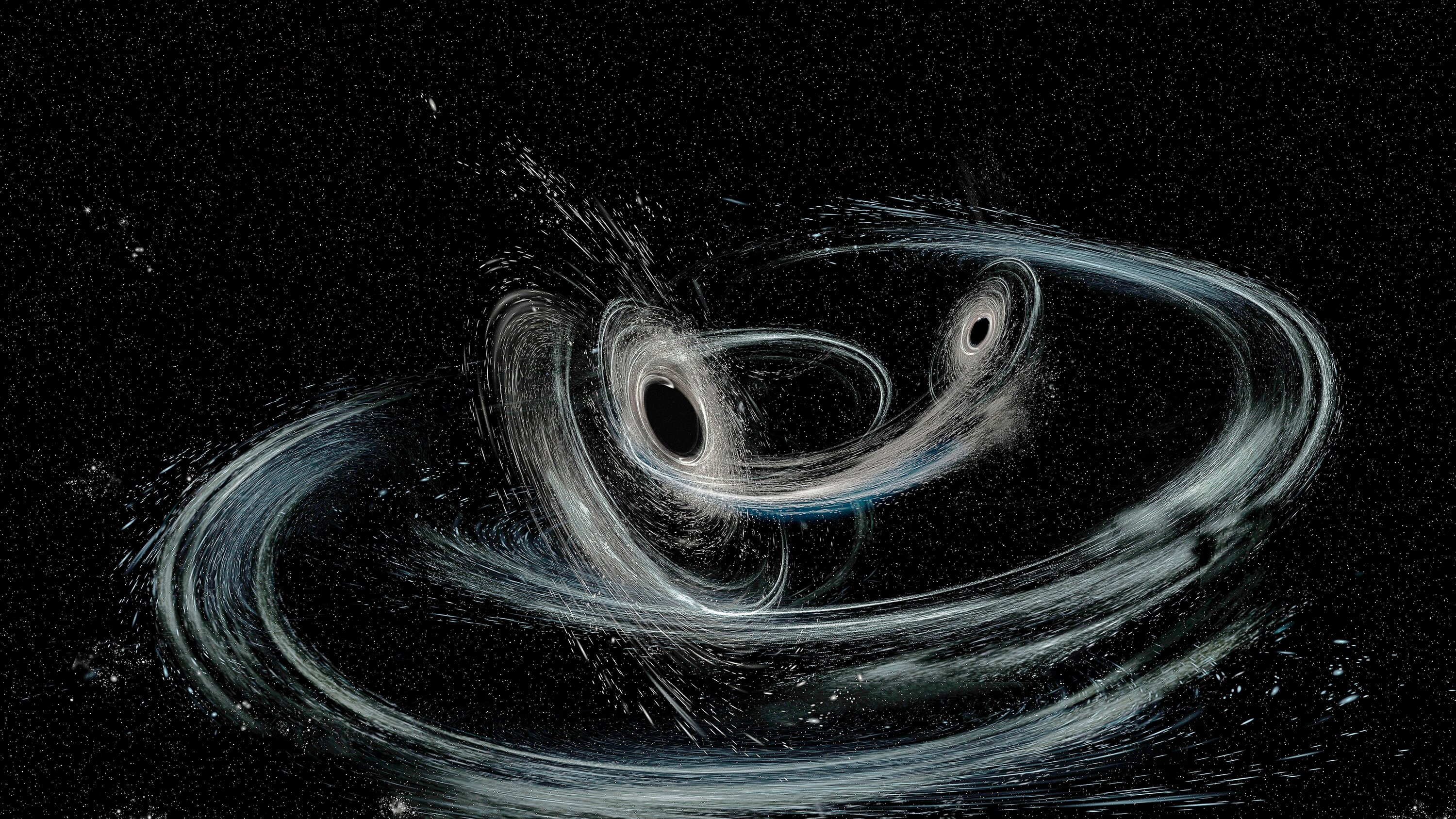
Image Credits: LIGO / Caltech / MIT / Sonoma Stat (Aurore Simonet)