The Hellenic Institute

The Hellenic Institute

The Hellenic Institute is committed to the promotion of research in all matters Hellenic. We sponsor and encourage research across all periods from the antique to the contemporary and across all regions where Hellenic culture is studied and received. We are committed to international excellence in the study of matters Hellenic, fostering discussions and debates in these areas, and reaching out and engaging with communities in Greece, Cyprus and the diaspora and communities where Greek culture is received and studied.

Hellenic culture is uniquely positioned. It is both local and global. It has deep roots and a living history and a vibrant modern manifestation. Greece and Cyrus are positioned as inheritors of this globally important cultural tradition and as modern, diverse cultures at a crossroads in the Mediterranean. The reception of historical Greek cultures and the diasporic spread has positioned Greece and its traditions as a global culture. The Greek population in all their locations negotiate traditions and identity in communication and interaction and the place of Hellenic culture in the world. This has been the essence of Greece from the earliest times and Greek culture has always been a culture in communication. 

To study matters Hellenic is inherently multidisciplinary. We look to bring together archaeologists and Classicists, Historians studying antiquity to modernity, economists and sociologists, literary studies (across all periods), drama and media studies. 

We seek to work with institutions and individuals engaged in Hellenic studies and with community groups in UK, Greece, Cyprus and wherever else we can share our enthusiasms, interests and insights. 

From March 2026, the directors of the Hellenic Institute are Dr Efi Spentzou and Professor Richard Alston. Efi is a Classical literary scholar who has worked on a wide range of Latin and Greek literature and the reception of the Classical in the modern world, including in Greek culture. Richard is a historian of antiquity who has worked on the Eastern Mediterranean and published on modern receptions of Greek and Roman culture, particularly on Athens after the revolution on 1821. See here for more details on the directors. 

Activities and Research

Foundation of the Hellenic Institute


Call for applications 2026

Thanks to the generosity of Ministry of Education, Sport and Youth of the Government of Cyprus, we are able to offer a small number of bursaries to support postgraduate studies at Royal Holloway. 

We will offer two bursaries of £1,000 to PhD students who have a focus on Hellenic Studies and two bursaries of £500 for MA studies within the Faculty of Arts, Humanities and Social Sciences. To be eligible: 

·       PhD students must be working on a thesis which is substantially engaged in matter Hellenic.

·       MA students must be taking at least 90 credits in Hellenic studies. 

For these purposes, Hellenic Studies is defined as studying any subject which is wholly or largely concerned with matters of archaeology, history, society, economy, literature or culture in any period relating to Greece or Cyprus or the Greek or Cypriot diaspora. No preference will be shown for any chronological period or disciplinary study. In the event of candidates being equivalent on other criteria, preference may be given to students studying Cypriot issues and material.

The PhD awards will be judged on academic merit which will be ascertained through prior qualifications and by the quality of the research project. The MA awards will be judged on academic merit and commitment to Greek/Cypriot studies.

Application is by letter and CV to Professor Richard Alston. The letter should be no more than one page and should give details of why the applicant believes that they meet the criteria for the award. The CV should also be one page and give details of prior academic achievement.

The awards will be considered by an awards committee and judgements made against the criteria set out above. Applications should be submitted by 5 pm on October 21st and we will aim to make decisions within the next week. 


The Institute is funded by the donations of its supporters.

Many of the activities of the Institute are directly supported by the Government of Cyprus and the Embassy of Greece in the United Kingdom.

The Directors give thanks to the generosity of Ministry of Education, Sport and Youth of the Government of Cyprus. We thank the staff of the Embassy of Cyprus for their support and aid in securing those resources.

We also thank the Embassy of Greece in the United Kingdom for its staff for their encouragement, guidance and their financial support. 

We thank the A.G Leventis foundation for its generous funding of the post-doctoral scholarship currently held by Dr Christopher Jotischky.

The Friends of the Hellenic Institute have established Prizes such as The Joan Mervyn Hussey Memorial Prize in Byzantine Studies and The John Penrose Barron Memorial Prize in Hellenic Studies and bursaries in honour the memories of Julian Chrysostomides, Kostas Kalimitzis, Konstantinos Kokonouzis, Pat Macklin and Joseph A. Munitiz.

You can make an online donation to The Hellenic Institute via this link.

If you would like to know more about supporting The Hellenic Institute, please contact us on: development@royalholloway.ac.uk or 01784 443100

Directors

Prof. Richard Alston, Co-Director of The Hellenic Institute

Dr Efi Spentzou, Co-Director of The Hellenic Institute

Dr Paris Papamichos Chronakis, Director of Centre for Greek Diaspora Studies

Associated Staff

  • Prof. Kate Cooper, BA, MTS, PhD: The Mediterranean world in the Roman period, particularly daily life and the family, religion and gender, social identity; early Christianity, Christian saints and martyrs
  • Prof. Veronica Della Dora, BA, PhD: Cultural and historical geography; landscape studies; history of cartography; Byzantine and post-Byzantine sacred geographies
  • Associate Prof. Charalambos Dendrinos, MA, PhD: Byzantine literature and Greek palaeography; editing and transmission of Byzantine texts
  • Prof. Manolis Galenianos, MA, PhD: Contemporary Greek economy; the Greek financial crisis.
  • Prof. David Gwynn, MA, DPhil (Reader): Late Antique history and theology
  • Prof. Jonathan Harris, MA, PhD: Byzantine history, 1000-1453; Byzantium and the West, especially during the Crusades and the Italian Renaissance
  • Dr Christopher Jotischky, DPhil (History): Greek intellectual culture and literature in 19th c., modern Greek national identity and classical antiquity, modern Greek prose literature  
  • Prof. Christos Kremmydas, MA, PhD: Greek rhetoric and oratory (especially Demosthenes); Athenian political and social history (especially law); Greek papyrology
  • Dr Nick Lowe, MA, PhD (Reader): Greek and Latin literature, especially comedy; Greek religion
  • Prof. Jari Pakkanen, BA, PhD: Greek archaeology and Architecture; the methodology of architectural reconstructions
  • Prof. Lene Rubinstein, MA, PhD: Athenian social history; Athenian oratory and law; papyrology; Roman Egypt
  • Prof. John Sellars, MA, PhD: Hellenistic philosophy, the Stoic tradition


founders-events.jpg

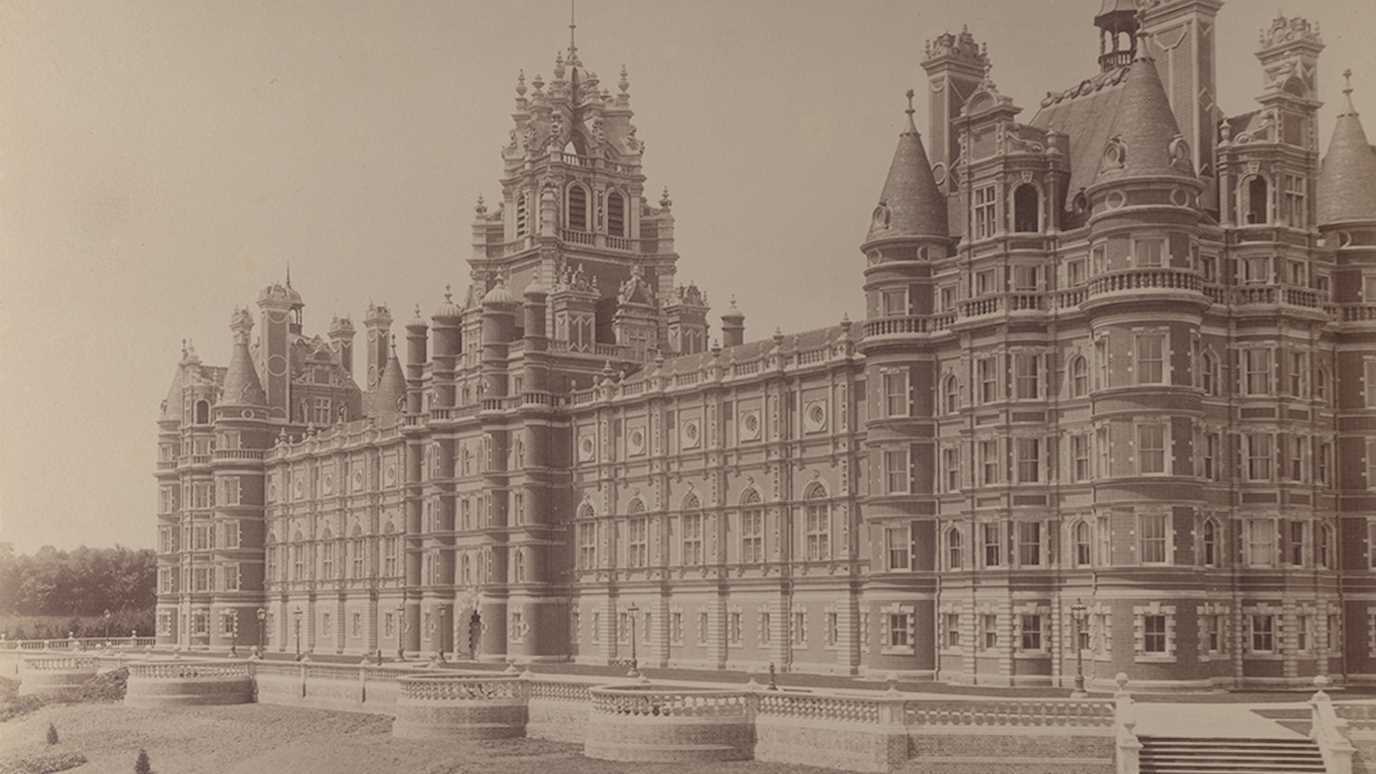
The Hellenic Institute, Royal Holloway, University of London

We are delighted to invite you to our forthcoming events below, organized also in collaboration with other institutions, addressed to students, scholars and the wider public this year. We look forward to seeing you, your family and friends.

You are also welcome to pray and attend meetings and Holy Services with Royal Holloway Multifaith Chaplaincy and the Greek Orthodox Church of the Holy Epiphany and St Andrew the Apostle in Egham Hythe, Staines.

For a guide to travel to the College, please click here.
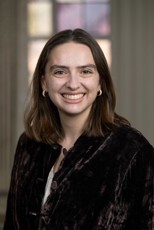
 

 Amanda Kubic

5 March 2026: 'Orbits of Movement, Choreographies of Memory: Unfolding a Female Network of Modern “Greek” Dance' by Dr Amanda Kubic (University of Amsterdam)

Senate House, Room 104, Malet Street, London WC1E 7HU) at 6.15pm (London time)

To attend online via MS Teams please press this link

Meeting ID: 319 809 880 093 71

Passcode: Zu6yD7Df

The lecture unfolds various connections between four female figures in the history of modern “Greek” dance, both in Greece and abroad in the US and Europe over the last century. The focus is on Koula Pratsika, Rallou Manou, Martha Graham, and Valasia Simeon as a network of choreographers and dance educators who together can shed light on the personal, political, and aesthetic ideologies that have informed the development of Greek” dance since the 1920s, from the deployment of mythic narratives to the incorporation of disabled epistemologies. 

Dr Amanda Kubic holds a PhD in Comparative Literature from the University of Michigan, Ann Arbor, and is currently Marilena Laskaridis Visiting Fellow in Modern Greek Studies at the University of Amsterdam. She has published in journals such as Modernism/modernity and in various edited volumes, and is currently working on her first monograph project.

The event is coorganised by the Centre for Greek Diaspora Studies and The Hellenic Institute of Royal Holloway, University of London and the Centre for Hellenic Studies of King's College London.

All welcome. 

For further information please contact Dr Christopher Jotischky and Dr Paris Chronakis
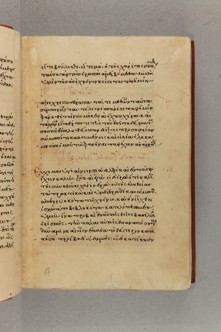


6 February-27 March 2026: The Letters of George of Cyprus

University of London Postgraduate Working Seminar on Editing Byzantine Texts

Room 103, Senate House, University of London, Malet Street, London WC1E 7HU and online via Zoom on Fridays 3-5pm

The Seminar is preparing a new annotated edition and translation of the Letters of George of Cyprus (later Ecumenical Patriarch Gregory II, 1283-1289). Scholars and graduate students from Colleges of the University of London and visiting students and scholars from other Universities and research centres are most welcome to participate. 

For further information please contact Dr Charalambos Dendrinos and Jack Dooley 


St Thomas Aquinas, Italian philosopher and theologian - Stock Image -  C045/4415 - Science Photo Library

12 November 2025: Thomas de Aquino Byzantinus: 
Ο Θωμάς Ακυινάτης στο Βυζάντιο

Hybrid International Colloquium 

University of Patras, Building B, Rio Campus, 26504 Patras, Greece at 4pm (GMT)

To attend online via Zoom please press this link

Meeting ID: 916 0877 6720
Passcode: 647448

The theological and philosophical dialogue between the Greek East and the Latin West has witnessed a revival of interest among theologians, philosophers, historians, philologists, and palaeographers. Focusing on the reception of Thomas  Aquinas’ works, the Colloquium presents and discusses findings of the research on critical editions of translations of, and commentaries on Thomisitic works by Byzantine scholars and theologians as part of the ongoing research project Thomas de Aquino Byzantinus.

The colloquium includes the presentation of two volumes of the project published by Brepols in the Corpus Christianorum – Series Graeca / Thomas de Aquino Byzantinus Series prima et altera: 

  • John Monfasani (ed.), Joannes Gattus, Notata, seu Tractatus qui erat fons libri III operis Bessarionis ‘In Calumniatorem Platonis adversus Georgium Trapezuntium’ (Corpus Christianorum – Series Graeca 94; Thomas de Aquino Byzantinus – Series altera XIII), Brepols, Turnhout, 2021.
  • Marie-Hélène Blanchet, (ed.), Thomae de Aquino De rationibus fidei in Graecis versionibus Atoumis et Demetrii Cydonis (Corpus Christianorum – Series Graeca 104; Thomas de Aquino Byzantinus – Series Series prima, IV, 1), Brepols, Turnhout, 2025.
Speakers include:
  • Professor Panagiotis Ch. Athanasopoulos (Ioannina)
  • Dr Marie-Hélène Blanchet (CNRS, Paris)
  • Professor John A. Demetracopoulos (Patras)
  • Thanos Kerefides (Patras / Athens)
  • Dr Michail Konstantinou-Rizos (Patras / London)
  • Aris Panopoulos (Paris / Patras)

To access the program of the event please press this link.

Co-organised by the Laboratory of Greek and Latin Philosophical Literature "Linos Benakis", School of Theology of the University of Patras and The Hellenic Institute of Royal Holloway.

For further information please contact Prof. John A. Demetracopoulos
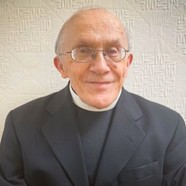


1 September 2025: Appointment of Dr Christopher Jotischky as Postdoctoral Fellow in Modern Greek Studies (2025-2027)

Thanks to generous funding from the A.G. Leventis Foundation, the first Postdoctoral Fellowship in Modern Greek Studies was established and advertised internationally in June 2025. The posting attracted a worldwide interest and the selection panel received 37 high-calibre applications from the United Kingdom, Europe, Greece, and the United States. The applicants represented a remarkably diverse range of disciplinary fields and areas of study, from Greek-American diaspora museums to reconciliatory practices in community archaeology in contemporary Cyprus, and from nostalgia for 1980s Greece to the role of music in multi-ethnic Thessaloniki. Taken together, the applications clearly demonstrate the vitality of the fields of Modern Greek and Greek Diaspora Studies, the impressive work being carried out by early-career researchers worldwide, and, equally, the urgent need to support them. The timing of the Fellowship could therefore not be better. The selection panel elected unanimously Dr Christopher Jotischky as the inaugural Postdoctoral Fellowship in Modern Greek Studies (2025-2007).

Dr Christopher Jotischky is a historian of the intellectual culture and literature of long nineteenth-century Greece, with a particular interest in the construction of Greek national identity through and around the legacy of classical antiquity, and the development of prose literature in the modern Greek language. He began his academic life as an undergraduate in Classics at the University of Oxford before completing a PhD combining Classics and Modern Greek Studies at Brown University, USA, in 2024. He has since held positions at the University of Amsterdam (Laskaridis Visiting Fellow in Modern Greek Studies, 2025) and the Institute of Classical Studies, University of London (Early Career Research Associate, 2024–2025). Dr Jotischky has published in journals such as Classical Receptions Journal (2023) and Skenè (2024), and is currently preparing his first monograph, The Silent Canon: Latin in Greece, 1821–1945, for publication with Oxford University Press. This will be the first monograph-length history of the Roman legacy in post-independence Greece to combine literary reception with the history of Latin pedagogy and the cultural impact of the Roman Empire in the country.

Dr Christopher Jotischky is joining The Hellenic Institute and the Centre for Greek Diaspora Studies, the Department of History and the Faculty of Arts, Humanities and Social Sciences for the next two academic years. We wish him wholeheartedly every success with his work - Καλή επιτυχία!

 For earlier events see here.

The Hellenic Institute coordinates the following two MA courses:

  • MA Late Antique and Byzantine Studies: An intercollegiate University of London course taught jointly with University College London and the collaboration of King's College London and Birkbeck, University of London. This course is designed especially for those who are interested in progressing to doctoral research in Late Antique and Byzantine studies. It also aims to relate the history of Late Antiquity and Byzantium to the wider world.
  • MA History: Hellenic Studies: This course aims to give students from various backgrounds the opportunity to have an overall view and appreciation of Greek history and culture embracing the Homeric and Classical ages, the Hellenistic and Roman world, the Byzantine and Post-Byzantine periods, and the modern world. Its diachronic and interdisciplinary nature enable students to examine the elements which characterise Hellenic culture through the centuries, at the same time acquiring a deeper knowledge of a certain period and discipline, including philosophy, history, law, religion, theatre, language, literature, papyrology and palaeography.

Other related MA Programmes are offered at Royal Holloway, Classics Department: 

The Centre for Greek Diaspora Studies (CGDS) has been established within The Hellenic Institute at Royal Holloway, University of London. The foundation of the CGDS represents the fulfilment of a long-term aim of the Hellenic Institute. The initiative was first proposed by Professor Richard Clogg on 14 March 2013, at the end of the Twelfth Annual Hellenic Lecture, “Xeniteia: the Greek Diaspora in Modern Times.” Two years later, on 17 March 2015, the establishment of the CGDS was formally announced following the Fourteenth Annual Hellenic Lecture, "From Greeks Abroad to the Greek Diaspora: Hellenism in a Changing World," delivered by Professor George Prevelakis. Dr George Vassiadis served as CGDS's first Director (2015-2019), succeeded by Dr Achilleas Hadjikyriakou (2021-31.V.2024). The current Director is Dr Paris Chronakis.

Activities

The CGDS aims at creating an active international network of scholars and students interested in all aspects of the Greek and Cypriot Diaspora communities around the world. The involvement of members of the general public is encouraged as well. The Centre examines the history and contribution of Greek and Cypriot migrants to their host communities and countries internationally, and promotes interdisciplinary cooperation through the sharing of ideas and information, and the coordination of collaborative research projects. Since the establishment of The Hellenic Institute, a particular area of interest has been the history of the Greek Community in London, and the CGDS continues to encourage research into this promising subject.

Associate members of the CGDS include postgraduate students and staff from History and other Royal Holloway departments who are working in related fields. Students and scholars from other universities and institutions worldwide are warmly invited to participate in the Centre’s activities. The CGDS welcomes support from members of the public, and private, public and corporate funding bodies.

In September 2019, to celebrate the 25th Anniversary of The Hellenic Institute a four-year Scholarship in Greek Diaspora Studies was established in the History Department of Royal Holloway, thanks to generous donations from The Hellenic Foundation (London), The Samourkas Foundation (New York), The Bodossaki Foundation (Athens), The Friends of the Hellenic Institute, and private sponsors and donors. The 25th Anniversary Scholarship was awarded by the History Department Postgraduate Awards Committee to Georgios Argiantopoulos, who in November 2024 was awarded the PhD degree by Royal Holloway, University of London for his thesis "The British Occupation of Egypt in 1882 and its consequences for the Greek and Cypriot Communities", supervised by Professor Dan Stone and Dr Paris Papamichos Chronakis.

On 1 September 2025 Dr Christopher Jotischky was appointed Postdoctoral Fellow in Modern Greek Studies (2025-2027).
Thanks to generous funding from the A.G. Leventis Foundation, the first Postdoctoral Fellowship in Modern Greek Studies was established and advertised internationally in June 2025. The posting attracted a worldwide interest and the selection panel received 37 high-calibre applications from the United Kingdom, Europe, Greece, and the United States. The applicants represented a remarkably diverse range of disciplinary fields and areas of study, from Greek-American diaspora museums to reconciliatory practices in community archaeology in contemporary Cyprus, and from nostalgia for 1980s Greece to the role of music in multi-ethnic Thessaloniki. Taken together, the applications clearly demonstrate the vitality of the fields of Modern Greek and Greek Diaspora Studies, the impressive work being carried out by early-career researchers worldwide, and, equally, the urgent need to support them. The timing of the Fellowship could therefore not be better. The selection panel elected unanimously Dr Christopher Jotischky as the inaugural Postdoctoral Fellowship in Modern Greek Studies (2025-2007).

Dr Christopher Jotischky is a historian of the intellectual culture and literature of long nineteenth-century Greece, with a particular interest in the construction of Greek national identity through and around the legacy of classical antiquity, and the development of prose literature in the modern Greek language. He began his academic life as an undergraduate in Classics at the University of Oxford before completing a PhD combining Classics and Modern Greek Studies at Brown University, USA, in 2024. He has since held positions at the University of Amsterdam (Laskaridis Visiting Fellow in Modern Greek Studies, 2025) and the Institute of Classical Studies, University of London (Early Career Research Associate, 2024–2025). Dr Jotischky has published in journals such as Classical Receptions Journal (2023) and Skenè (2024), and is currently preparing his first monograph, The Silent Canon: Latin in Greece, 1821–1945, for publication with Oxford University Press. This will be the first monograph-length history of the Roman legacy in post-independence Greece to combine literary reception with the history of Latin pedagogy and the cultural impact of the Roman Empire in the country.

Dr Christopher Jotischky is joining The Hellenic Institute and the Centre for Greek Diaspora Studies, the Department of History and the Faculty of Arts, Humanities and Social Sciences for the next two academic years. 

Events

5 March 2026: 'Orbits of Movement, Choreographies of Memory: Unfolding a Female Network of Modern “Greek” Dance' by Dr Amanda Kubic (University of Amsterdam)

Senate House, Room 104, Malet Street, London WC1E 7HU) at 6.15pm (London time)

To attend online via MS Teams please press this link

Meeting ID: 319 809 880 093 71

Passcode: Zu6yD7Df

The lecture unfolds various connections between four female figures in the history of modern “Greek” dance, both in Greece and abroad in the US and Europe over the last century. The focus is on Koula Pratsika, Rallou Manou, Martha Graham, and Valasia Simeon as a network of choreographers and dance educators who together can shed light on the personal, political, and aesthetic ideologies that have informed the development of Greek” dance since the 1920s, from the deployment of mythic narratives to the incorporation of disabled epistemologies. 

Dr Amanda Kubic holds a PhD in Comparative Literature from the University of Michigan, Ann Arbor, and is currently Marilena Laskaridis Visiting Fellow in Modern Greek Studies at the University of Amsterdam. She has published in journals such as Modernism/modernity and in various edited volumes, and is currently working on her first monograph project.

The event is coorganised by the Centre for Greek Diaspora Studies and The Hellenic Institute of Royal Holloway, University of London and the Centre for Hellenic Studies of King's College London.

All welcome. 

For further information please contact Dr Christopher Jotischky and Dr Paris Chronakis

4-5 June 2025: Inter-faith encounters in Late Byzantium:
Conflict and dialogue in the Eastern Mediterranean
2025 Institute of Classical Studies Virtual Byzantine Colloquium

The Eastern Mediterranean has always been a world of religious, cultural and ethnic diversity. During the late Byzantine period and the early Ottoman era (13th-15th c.), the challenges posed by war, political fragmentation, empire formation and management, migration, natural disasters and epidemic diseases led to new ways of religious interaction. Landmarks in this process were the Crusades, the Latin conquest of Byzantine territories, the Mongol expansion, and the rise and consolidation of the Ottomans. A mosaic of Christian, Jewish and Muslim communities found themselves in close contact, especially in the spheres of administration and economy as well as through inter-marriage, conversion and enslavement. Common spiritual needs and metaphysical anxieties and expectations, such as the quest for miraculous healing, led to shared pilgrimage shrines (e.g., Christian churches and dervish tekkes) and the inter-faith veneration of holy men and women. Not only were religious beliefs, customs and practices belonging to Christian sub-groups adopted and appropriated by other Christian sub-groups, but they also present similarities or even seem to have influenced and were themselves influenced to various degrees by Jewish and Muslim traditions. Last but not least, the geographical proximity and co-existence of the three monotheistic religions in this long period inspired religious clash in the public sphere (e.g., pogroms and popular revolts), and led their religious spokesmen to conduct theological debates and pen apologetic treatises against the religious Other.

The Colloquium explored case studies of unity in diversity or unity vs diversity in Late Byzantium, a period of dramatic decline of the Byzantine Empire and the parallel rise of the Ottoman Empire, in a vast territory inhabited by various Christian, Jewish and Muslim communities. It threw new light to the history and culture of the Eastern Mediterranean, the region of the Black Sea, the Balkans and Asia Minor at a time marked by tension and intolerance together with gradual assimilation and adaptation as well as by a high degree of flexibility and fusion of cultures. Such intermingling is evident in the social and intellectual world of the protagonists involved, in literature, art, architecture, and visual and material culture. Our nine speakers from Austria, Britain, Cyprus, Serbia, and the United States, representing a variety of scholarly fields and methodological approaches, focused on case studies of inter-faith encounters during the late Byzantine and the early Ottoman periods (13th-15th c.), covering aspects of inter-faith tension, conflict, tolerance and co-existence, re-addressing earlier debates and providing fresh perspectives on the mechanics of identity formation, boundary building, inter-religious and inter-cultural exchange, and community inclusion and exclusion, shedding light on the complexities of a colourful, yet harsh and violent world, inhabited by Christians, Jews and Muslims of different denominations. 

The Colloquium was dedicated to the loving memory of Anastasios Yannoulatos,  
Archbishop of Tirana, Durrës, and All Albania (1929-2025).

Co-organised by the Hellenic Institute and the Centre for Greek Diaspora Studies at Royal Holloway, University of London, under the aegis of the Institute of Classical Studies, the Colloquium was attended by 42 students, academics and members of the public.


21 May 2025: Ruth Padel and Paris Papamichos Chronakis: Reading and Conversation on Jews in early twentieth-century Greece
The Society for Modern Greek Studies (UK) Annual Lecture

The Hellenic Centre, 16-18 Paddington Street, Marylebone, London W1U 5AS at 3pm

Professor Ruth Padel, author of Daughters of the Labyrinth, and Dr Paris Papamichos, Chronakis, author of The Business of Transition: Greek and Jewish Merchants of Salonica from Ottoman to Greek Rule, will read from and talk about their books, and discuss the multifaceted presence of Jews in early-twentieth century Thessaloniki and Crete at a time of transition.

About the Speakers

Ruth Padlel is Professor of Poetry Emerita at King’s College, London. She has published ten poetry collections, a novel and eight books of non-fiction including much–loved books on how to read poetry, a travel-memoir on tiger conservation, and a study of the influence of Greek myth on rock music. Awards include a British Council Darwin Now Award, a Society of Authors Travel Bursary and Cholmondley Award and First Prize in the National Poetry Competition.

Paris Chronakis is Lecturer in Modern Greek History at Royal Holloway University of London. His research explores the entangled histories and divided memories of Jews and Christians in the Eastern Mediterranean from the late Ottoman Empire to the Holocaust. His first book, The Business of Transition: Jewish and Greek Merchants of Salonica from Ottoman to Greek Rule, was published by Stanford University Press in October 2024, winning that year’s National Jewish Book Awards – JDC-Herbert Katzki Award (Writing Based on Archival Material).

Free entry | RSVP at violetta.hionidou@newcastle.ac.uk

For further information please visit The Hellenic Centre


Courage and Compassion: A Jewish Boyhood in German-Occupied Greece

17 March 2025: A Jewish Boyhood in Nazi Greece: Author Antony Molho in conversation with David Abulafia and Paris Chronakis

Hybrid Book Talk at 6.30-8pm 
The Wiener Holocaust Library, London WC1B 5DP

The Holocaust and Genocide Research Partnership (The Wiener Holocaust Library and the Holocaust Research Institute, Royal Holloway University of London), in partnership with The Centre for Hellenic Studies, King’s College London, and the Centre for Greek Diaspora Studies at Royal Holloway, University of London are delighted to host a special event with author Antony Molho on his book, Courage and Compassion: A Jewish Boyhood in German-Occupied Greece, published by Berghahn in 2024. You are invited to attend this event in person or online.

In this extraordinary personal account of childhood and survival during the Holocaust, Tony Molho recounts his adventures in 1940s Greece from ages four to six, as his parents risked everything to hide him from the German occupiers. In doing so, he pays homage to the many ordinary people who selflessly protected his family, demonstrating that even in the darkest times, the self-sacrifice and kindness of modest people can still prevail.

It will be followed by a light drinks reception from 7.45 pm.

About the Speakers

Tony Molho (born in 1939 in Thessaloniki, Greece) is the David Herlihy University Professor Emeritus at Brown University and Professor Emeritus of History and Civilization at the European University Institute in Florence.

David Abulafia is Emeritus Professor of Mediterranean History at the University of Cambridge, a Fellow of Gonville and Caius College and a former Chairman of the Cambridge History Faculty. His previous books include Frederick II, The Western Mediterranean Kingdoms and The Great Sea, which has been translated into a dozen languages. He is a member of the Academia Europaea, and in 2003 was made Commendatore dell’Ordine della Stella della Solidarietà Italiana in recognition of his work on Italian and Mediterranean history.

Paris Chronakis is Lecturer in Modern Greek History at Royal Holloway University of London. His research explores the entangled histories and divided memories of Jews and Christians in the Eastern Mediterranean from the late Ottoman Empire to the Holocaust. His first book, The Business of Transition: Jewish and Greek Merchants of Salonica from Ottoman to Greek Rule, was published by Stanford University Press in October 2024, winning that year’s National Jewish Book Awards – JDC-Herbert Katzki Award (Writing Based on Archival Material).

Book through The Wiener Holocaust Library  or Eventbrite 

For further information please contact Dr Paris Chronakis


The Business of Transition

25 October 2024: New publication

Paris Papamichos Chronakis, The Business of Transition. Jewish and Greek Merchants of Salonica from Ottoman to Greek Rule, Stanford Studies in Jewish History and Culture (Princeton University Press, 2024), 416 pp, Hardcover ISBN: 9781503639669, Ebook ISBN: 9781503640931

The Business of Transition examines how the cosmopolitan bourgeoisie of the Eastern Mediterranean navigated the transition from empire to nation-state in the early twentieth century. In this social and cultural history, Paris Papamichos Chronakis shows how the Jewish and Greek merchants of Salonica (present-day Thessaloniki) skillfully managed the tumultuous shift from Ottoman to Greek rule amidst revolution and war, rising ethnic tensions, and heightened class conflict. Bringing their once powerful voices back into the historical narrative, he traces their entangled trajectories as businessmen, community members, and civic leaders to illustrate how the self-reinvention of a Jewish-led bourgeoisie made a city Greek.

Papamichos Chronakis draws on previously untapped local archival material to weave a rich narrative of individual portraits, introducing us to revered philanthropists and committed patriots as well as vilified profiteers and victimized Salonicans. Offering a kaleidoscopic view of a city in transition, this book reveals how the collapse of empire shook all the constitutive elements of Jewish and Greek identities, and how Jews and Greeks reinvented themselves amidst these larger political and economic disruptions.

21 October 2022: Visit of HE the Greek Deputy Foreign Minister for Diaspora Greeks Mr Andreas Katsaniotis to the College

At the invitation of The Hellenic Institute, HE the Greek Deputy Foreign Minister for Diaspora Greeks Mr Andreas Katsaniotis paid an official visit to the College on Friday 21 Οctober 2022 to discuss the present state and the future of Hellenic Studies at Royal Holloway. He was welcomed and guided around the College by the Vice-Principal (International) and Executive Dean of the School of Humanities Professor Giuliana Pieri, Dr Charalambos Dendrinos, Director of the Hellenic Institute and Dr Achilleas Hadjikyriacou, Manager of the Hellenic Institute and Director of the Centre for Greek Diaspora Studies, Mrs Deborah Meyer, Head of Development and Operations, and Mrs Janice Rodriguez-Mendes, Development Manager (Major Gifts).

Mr Katsaniotis was accompanied by the Ambassador Mr Christodoulos Margaritis, Director of his Cabinet Office, Mrs Iphigenia Kanara, Deputy Head of the Diplomatic Mission of Greece in the UK representing HE the Ambassador of Greece in UK Mr Ioannis Raptakis, and Mrs Eleni Soupiana, Press Counsellor at the Embassy of Greece. The visit started with a guided tour in the Picture Gallery with the beautiful collection of Victorian paintings including “The Babylonian marriage market” by Edwin Long, inspired from Herodotus’ Histories, then through the North Quad with the imposing statue of Queen Victoria crowned by the College and the inscription of its inauguration, to The Emily Wilding Davison Building with the new Library and the Archive, where they examined, rare volumes with facsimile editions of eleventh- and twelfth-century Greek manuscripts with Aristophanes’ comedies and Sophocles’ tragedies, Bernard de Montfaucon’s Palaeographia Graeca with a dedication to King Louis XIV (Paris, 1708), and a second folio copy of William Shakespeare’s plays (1622) under the guidance of the Archives and Special Collections Curator Dr Anne Marie Purcell. Mr Katsaniotis was briefed by Dr Hadjikyriacou about the activities and research projects of the Centre for Greek Diaspora Studies (CGDS). The visit concluded with Lunch in honour of HE the Deputy Foreign Minister hosted by Professor Pieri in the Large Boardroom in Founder’s Building in the presence of the Heads of Classics and History Departments, Dr Christos Kremmydas and Dr Daniel Beer respectively, the Modern Greek Language Tutor Dr Polymnia Tsagouria, Professor Konstantinos Markantonakis, Department of Information Security, and Mrs Meyer and Mrs Rodriguez-Mendes, representing the College Marketing and Communications Office.

During the Lunch, Professor Pieri thanked HE the Deputy Minister on behalf of the College and the School of Humanities for his Visit and his interest for the activities of The Hellenic Institute and the CGDS. On his part, Mr Katsaniotis expressed his warm thanks for the College’s hospitality and his appreciation for the work of the Institute and the CGDS: “Greek Diaspora is a very significant part of the Greek collective identity, history and culture. I am impressed by what I saw and heard today at Royal Holloway. The Greek State stands beside the The Hellenic Institute and the Centre for Greek Diaspora Studies. We will support to the best of our abilities your copious efforts.” In his speech, Dr Dendrinos stressed “the tradition of the Greeks, from time immemorial to our own days, of exploring the world beyond the limits of their homeland, discovering new lands, seeking new ideas, opening new horizons and, most importantly, gaining a deeper understanding of themselves.” Finally, the Greek officials visited the College Chapel, which they admired for its symbolism and beauty. Before departing, Mr Katsaniotis expressed the wish to visit the College again next year to attend the Twenty-first Annual Hellenic Lecture on 30 March 2023, which coincides with the 30th Anniversary since the founding of The Hellenic Institute at Royal Holloway.

February-July 2022: 'Creating Diasporic Worlds' Creative Commissions 2022

The Greek word diaspora indicates the dispersal of a group of people from one original country to other countries, or the act of spreading in this way. Embedded in its etymology (dia ‘across’ + speirein ‘sow seed’, ‘scatter like seed’) is a centrifugal movement away from a shared place of origin. This physical movement is usually balanced by a centripetal imaginary movement towards a longed-for homeland, which often translates into nostalgia (nostos ‘return home’ + algos ‘pain’) – the yearning for return home, or to an irrecoverable past condition. Lingering between past and present, and crossing geographical and political boundaries, diasporas are nonetheless deeply rooted in territorial imaginations and in a sense of place. They at once transcend and rest on the map. Diasporas are thus commonly defined by their geographical, social, political and spiritual liminality. Yet diasporas are also culturally expressed, creatively practiced and continually performed. In scattering seeds across the world, they create their own worlds and fertilize others.

The Centre for Greek Diaspora Studies and the Centre for the GeoHumanities at Royal Holloway, University of London in collaboration with the Cyprus High Commission in London and the Fitzwilliam Museum – University of Cambridge, funded three Creative Commissions on the theme of ‘Creating Diasporic Worlds’. Each of the three Commissions were funded with £3,000. The programme was open to any collaboration between creative practitioners and early career researchers.

The Call was announced on 3 February 2022. 22 applications were received, 9 projects were shortlisted, 5 teams were interviewed, and 3 proposals were selected and are currently under implementation. The artistic outcomes of these projects, which include video installations, soundscapes, art installations and prints, were displayed in an exhibition that  took place at the Cyprus High Commission, 13 St James's Square, London SW1Y 4L between 5-7 July 2022 and attracted a large audience.

These Creative Commissions emerge from a collaboration between the Cyprus High Commission - Cultural Section, the Fitzwilliam Museum – University of Cambridge (under the project “Being an Islander: Art and Identity of the Large Mediterranean Islands”), the Hellenic Institute, the Centre for Greek Diaspora Studies and the Centre for the GeoHumanities at Royal Holloway, University of London. 

7-8 June 2022: The Late Byzantine Mediterranean: Byzantine Connectivities, Experiences and Identities in a Fragmented World

2022 Institute of Classical Studies Byzantine Colloquium

The Colloquium took place via Zoom

The period between the two falls of Constantinople, namely the Crusader conquest of 1204 and the Ottoman conquest of 1453, witnessed the radical transformation of Byzantium from empire into a mosaic of autonomous and semi-autonomous polities. The fascinating survival and transformation of Byzantine identities in a world dominated by Latin Christian and Muslim powers was the result of complex dynamics, with Constantinople functioning, more or less, as a magnet for the Orthodox populations beyond its narrow political borders. Theodoros Metochites’ (d. 1332) rhetoric eloquently captures the ideological, spiritual and cultural radiance of the “Queen City”. In his laudatory oration on the Byzantine capital, Metochites describes Constantinople as “the citadel of the whole world” (ἀκρόπολιν τινὰ τῶν ὅλων) and the “shared fatherland of all people” (κοινοπολιτεία πάντων ἀνθρώπων), stressing the city’s role as a centre, in both geographic and symbolic terms.

Over the past two decades, there has been a remarkable progress in the way scholars approach the history and culture of former Byzantine areas under Latin Christian and Muslim rule in the period between 1200 and 1400. The picture emerging from these studies embraces unity and diversity, interaction and contention, synthesis and conservativism, new identities and old. Research on the history of Mediterranean has also shown that the political, religious and cultural fragmentation of the Eastern Mediterranean increased, rather than restrained, the development of multiple connectivities, among the peoples inhabiting this vast liquid area. Yet, the nature and degree of bonds of unity between Late Byzantium and the former Byzantine lands —encompassing the physical mobility of humans and objects, as well as institutional, ideological, religious and cultural links— requires a more systematic and in-depth exploration.

The Colloquium re-addressed questions related to Byzantine connectivities, experiences and identities in Latin- and Muslim-ruled Mediterranean areas once belonging to the Byzantine Empire. Focusing on religion and culture as the main strands of identity preservation, negotiation and adaptation, our Colloquium  examined the threads weaving the tapestry of a “Late Byzantine Mediterranean”: a fluidly-defined κοινοπολιτεία under the enduring influence of Constantinople, but in constant communication and exchange with the religious and ethnic Other. The main themes of the Colloquium included, but were not restricted to, the following:

• Byzantine legacies in the Eastern Mediterranean after 1200
• Worlds of interaction and conflict (e.g., Asia Minor, the Holy Land, Egypt, Cyprus and the Aegean)
• The role of Byzantine culture as a transcultural language of communication
• The impact of intra-Byzantine conflicts in the Eastern Mediterranean
• Experiences of colonisation and foreign rule
• Instrumentalisation of identities in historiography (inclusions and exclusions)

Seventeen speakers from Britain, Canada, Cyprus, Germany, Greece, Serbia and the United States of America representing a variety of scholarly fields and methodological approaches, navigated the sea of Byzantine encounters in the Latin and Muslim worlds from the thirteenth to the fifteenth centuries. By paying close attention to the continuities and discontinuities that (re-)shaped Byzantine identities in the Eastern Mediterranean, they provided fresh and stimulated perspectives on the sense of belonging to Byzantium and its broader significance.

The Colloquium was dedicated to the loving memory of two great scholars, Speros Vryonis, Jr. and Elizabeth A. Zachariadou, who transformed our perception of the Byzantine legacy in the Eastern Mediterranean.

Co-organised by the Institute of Classical Studies, The Hellenic Institute and the Centre for Greek Diaspora Studies at Royal Holloway, University of London, the Society of Cypriot Studies and the Cyprus Committee for Byzantine Studies, the Colloquium was attended by 88 students and scholars.

To download the program with summaries of papers please use this link.

For further information please contact Dr Chrysovalantis Kyriacou and Dr Charalambos Dendrinos

6-7 May 2022: Borderland: Christian Identities and Cultures in Early Modern Cyprus and Beyond

International Virtual Colloquium

The Colloquium is dedicated to the loving memory of Michael Heslop (1941-2022), whose scholarly work enlightened perceptions of borderlands between Latins, Greeks and Others in Late Byzantium.

The fifteenth, sixteenth and seventeenth centuries witnessed the emergence of new confessional identities throughout Europe as well as the re-negotiation and adaptation of earlier confessional self-perceptions. Over the past four decades, medieval and early modern Cyprus has attracted the attention of the international scholarly community as a geographically distinct zone of religious diversity. So far, research in the field covers aspects of identity formation, religious contention and conviviality as well as the construction of institutional, social and economic structures. Less attention has been paid, however, to the dynamics and mechanisms of Christian co-existence and strife in relation to religious culture. Equally important, yet largely unexplored, is the impact on Cypriot Christian self-perceptions and religious culture of major and broader developments in Europe (e.g., the Renaissance, Reformation and Counter-Reformation) and the Levant, at the time of the Ottoman expansion and the transformation of the post-Byzantine “Commonwealth”.

Since Fredrik Barth’s work on the development, maintenance and negotiation of group boundaries (1969), scholars have been focusing on the relationship between identity and boundary construction, especially in multi-confessional and multi-ethnic societies. Although hardly impenetrable, boundaries ―physical/territorial and imaginary/psychological/spiritual― diachronically function as visible, audible, tangible and performed markers of religious and cultural perception and self-perception. The aim of our conference is to address the status of Cyprus as a “borderland” or “frontier-zone”, already noted but not adequately investigated and analysed in historiography. In what ways were religious and cultural borders defined, constructed, negotiated, performed, and crossed in Cyprus between ca. 1500 and 1600? How can borders help us better understand Cypriot Christian identities (Orthodox, Latin, Maronite, Armenian, among others) and forms of cultural expression? By bringing together scholars working on early modern multi-confessionalism and Cyprus from different disciplines and perspectives, and employing different sources, approaches and methodologies, we seek to offer a channel for fruitful dialogue and exchange of views and ideas on key themes related to the island’s religious geography and cultural physiognomy in this critical period. These include, but are not restricted to, the following:

• Borders and confessional relationships: communal inclusivism and exclusivism, shared beliefs, perceptions and practices
• Cyprus and broader perceptions of the border (e.g., insularity, connectivities and fragmentation) in relation to identities
• Cypriot diasporic communities and their borders in Western European societies
• Boundaries (or lack of) in secular and sacred space between Christianity and Islam
• Ritual as border performing and crossing: liturgy and theology, marriage, processions, and political choreographies
• Literature, visual culture and multi-confessionalism: borders imagined and represented
• Colonial, anti-colonial, de-colonial and post-colonial readings of the multi-confessional past: the making and un-making of borders (e.g., instrumentalisation of confessional identities —inclusions and exclusions— in historiography and literature).

Co-organised by the Bank of Cyprus Cultural Foundation,  The Fitzwilliam Museum, Cambridge, The Hellenic Institute and the Centre for Greek Diaspora Studies at Royal Holloway, University of London, the conference is part of the Bank of Cyprus Cultural Foundation’s research project CyChrist (POST-DOC/0916/0060). Funded by the European Regional Development Fund and the Republic of Cyprus through the Research and Innovation Foundation, CyChrist explores aspects of multi-confessionalism and human geography in early modern Cyprus, during the transitional period between the Venetian and Ottoman rule (ca. 1560-1670). The Conference was attended by over thirty students and scholars from Europe and the United States of America.

For further information please contact Dr Chrysovalantis Kyriacou 

For further information please contact Dr Chrysovalantis Kyriacou and Dr Achilleas.Hadjikyriacou@rhul.ac.uk

26 November 2021: Imagining a Free Greece: British, Cypriot and Russian engagement

Part of 21 in 21 programme of events celebrating the 200th Anniversary of the Greek War of Independence (1821-2021).

The event took place via MS Teams at 6pm (GMT)

Taking as a point of departure the famous Ionian Academy established by the great Philhellene Frederick North, 5th Earl of Guilford (1766-1827), being the first University established on Greek soil (1824-1827), this event, led by Dr Paris Papamichos Chronakis, explored the history of intellectual movements that led to the liberation of the Greeks, including the contribution of the Cypriots and the Greek communities in Britain and Russia. Professor Sakis Gekas (York University, Toronto)  delivered the main lecture on Lord Guilford and British cultural politics in the Ionian Islands followed by a panel discussion with Professor Lucien Frary (Rider University, New Jersey) on philhellenism and the Greek diaspora in the Russian Empire, and Dr Chrysovalantis Kyriacou (Bank of Cyprus Cultural Foundation/Royal Holloway) on Cyprus and Greek Cypriots in the Greek War of Independence. The event was attended by an audience of 34 students, scholars and friends.

The event is moderated by Dr Paris Papamichos Chronakis and hosted by the Hellenic Institute and Centre for Greek Diaspora Studies, Royal Holloway University of London.

Lecture

Sakis Gekas, ‘Lord Guildford, British cultural politics and colonialism in the Ionian Islands’

The opening of the Ionian Academy in Corfu is often presented as the personal project of Lord Guilford. Within the local and the imperial context of British colonialism, however, the institution represents a shift in the colonial practices and mode of rule, from the military-commercial to the cultural-civilizational, still at an early stage in the empire’s history of cultural politics and education. The talk will place the Ionian Academy within the constellation of Guilford’s ambitions and the context of colonial rule of the Ionian Islands as a protectorate. The contrast with the years of the revolutionary war in Greece could not be starker. Previous educational-cultural activities and institutions in the Ionian Islands allow us to understand the local context and the landscape in which the Ionian Academy emerged and functioned within the British protectorate. Guilford’s personal project and ambition for a centre of higher education predates the period of British rule in the Ionian Islands and reflects the impact of classical education on cultural projects and politics of the time.

Interventions

Professor Lucian Frary (Rider University, New Jersey), “Russophilia in the Ionian Islands and the Coming of the Greek Revolution”

Dr Chrysovalantis Kyriakou (Bank of Cyprus Cultural Foundation / Royal Holloway), “The Cypriots and the Greek Revolution of 1821”

To watch the event please click here.

27 October - 19 November 2021: Rethinking the City: Ethnic Displacement and Memory Politics in South Asia and the Eastern Mediterranean

The Centre of Global South Asia and The Hellenic Institute at Royal Holloway, University of London, are proud to host a series of online lectures, workshops and research conversations on ethnic displacement, memory, and the city in the Eastern Mediterranean and South Asia. "Frontier Urbanism" refers to two fault lines that have shaped the cities in South Asia and the Eastern Mediterranean: the ever-expanding frontier between urban and rural, and the frontiers created by ethnic cleansing and religious communalism in the process of nation formation. In a series of events, we seek to illuminate how these two frontiers have intersected and overlapped in surprising ways, often long after traumatic events of Partition and displacement have passed into memory. Join our conversations with academics and artists from the UK, Greece, India, and Bangladesh, on the following dates. To register please press the links below.

Wednesday 27 October, 16:30-18:00 UK time

Keynote lecture

Ian Talbot (Southampton), "Lahore, Amritsar and the Indo-Pakistan Frontier"

Wednesday 3 November, 16:30-18:00 UK time

In conversation

Renee Hirschon (Oxford) in conversation with Paris Chronakis (RHUL) on "Refugee Resettlement and Urban Development in twentieth-century Greece"

Please note that this event was cancelled for reasons beyond our control.

Wednesday 10 November, 16:00-18:30 UK time

Research Workshop

Alekos Lamprou (Marburg), Hareem Mirza (RHUL), Kalliopi Amygdalou (HFEFP, Athens), and Himadri Chatterjee (University of Calcutta) on "Refugees and their Cities" 

  • Alekos Lamprou, 'Violent Youths: Student Mobilization Against Minorities in Interwar Izmir'
  • Hareem Mirza, 'Whose Heritage? Colonial Heritage in Post-Colonial Cities'
  • Kalliopi Amygdalou, 'Spatial Experiences of Refugee Resettlement: The Case of Kaisariani in Athens'
  • Himadri Chatterjee, "'Crops of Our Fathers': Refugee Spirituality and The Urban Frontier"

Friday 19 November, 16:30-18:30 UK time

Art and Concluding Roundtable Discussion

Art by Shawon Akand (Dhaka)

Shubhra Gururani(York University, Toronto) and Rajarshi Dasgupta (JNU, New Delhi) on "Frontier Urbanism

1-2 June 2021: Sacred Mobilities in Byzantium and Beyond: People, Objects and Relics

2021 Institute of Classical Studies Byzantine Virtual Colloquium

The Colloquium took place via Zoom

All religious belief implicates space; all religious practice makes geography. In the broad sense, the term ‘sacred’ indicates something ‘different’, ‘set apart’, ‘other’, as well as something invested with special meaning. Yet, where do the boundaries of the sacred lie? Is sacred space an ontological given, or is it a social construction? Is it a portion of territory or the product of a set of embodied practices? Is it permanent or ephemeral?

Over the past two decades, the construction, experience and use of sacred space have generated increasing scholarly interest in the humanities, including Byzantine studies—from Alexei Lidov’s pioneering studies in hierotopy (2006) to more recent interdisciplinary initiatives (e.g., Mapping the Sacred in Byzantium at Newcastle University). Far from being understood as a fixed given entity, in these recent studies sacred space has intersected with issues of embodiment and performance, with environmental perceptions, attitudes and practice, with social mobility and identity, with the relations of private and public space, and with geopolitics and territorial imaginations. At the same time, the so-called ‘Mobility Turn’ (Sheller and Urry 2006) has extended from the domain of the social sciences to the humanities, prompting among historians, archaeologists and art historians new questions, approaches and understandings of issues of transport, movement and circulation of people, objects and ideas. Our Colloquium aims at setting these two strands—sacred space and mobility—in conversation with each other, in order to gain further insight into Byzantine and post-Byzantine spiritual culture.

In addition to conventional sacred spaces such as churches, shrines and religiously significant topographical features (such as holy mountains or caves, for example), holy people, sacred objects and relics were frequently used to create or sanctify other public or private profane spaces in the Byzantine and post-Byzantine world, and remain key to Orthodox worship. The mobility of certain sacra linked sacred sites with potentially new sacred destinations; it created new trajectories; it helped articulate and sustain the extra-ordinary within the ordinary. Sacred mobilities thus upset the dichotomy of the sacred and the profane as mutually exclusive. Examples of such mobilities include, but are not limited to travelling icons, processions, pilgrimages, the translation of relics, the reproduction of holy images and architecture. 

Eleven speakers from Britain, Cyprus, Georgia, Greece, Israel, Russia and the USA reflected on different types of sacred mobilities, including the use of sanctifying materialities, the duration of the transformation of sacred space, and the creation of ‘infrasecular geographies’ in the Byzantine and post-Byzantine world.

Co-organised by the Institute of Classical Studies, The Hellenic Institute and the Centre for the Geohumanities at Royal Holloway the Colloquium was attended by over seventy-five guests. To download the programme with abstracts of papers please use the following link: https://ics.sas.ac.uk/events/event/23337. For further information please contact Dr Mark Guscin and Revd David-John Williams

22 April 2021: “The Greek Revolution through the Eyes of 'Others'”

Part of 21 in 21 programme of events celebrating the 200th Anniversary of the Greek War of Independence (1821-2021)

The event took place online via MS Teams at 6.00-7.30pm (GMT)

Panel discussion focusing on perceptions of the Greek War of Independence across Southeastern Europe and the Eastern Mediterranean during and after the event, including attitudes of early nineteenth-century Albanian warlords, interwar Sephardi Jews, and mid-twentieth century Turkish historians. Speakers include Dr Antonis Hadjikiriakou (Panteion University, Athens), Dr Sukru Ilicak (Research Centre for the Humanities, Athens), and Dr Paris Chronakis (Royal Holloway, University of London). Respondent: Dr Konstantina Zanou (Columbia University, NYC).  The event was attended by over 80 guests. For further information on the talks and the speakers please visit 21 in 21.

For further information please contact Dr Paris Papamichos Chronakis

14 April 2021: “Virtual Book Talk: Sephardi Holocaust Histories: Families Adrift”

Part of the Family Histories of the Holocaust events series, at The Wiener Holocaust Library, 29 Russell Square, London WC1B 5DP

The event took place online at 7-8pm (GMT).

Panel discussion led by Dr Paris Chronakis exploring Sephardi family microhistories of the Holocaust including Thessalonian Jewry. Professor Sarah Abrevaya Stein will discuss her book Family Papers: A Sephardic Journey through the Twentieth Century (2020), based on the copious Levy family papers, which helped chronicle Sephardi Jewish life across and beyond the Ottoman Empire; and François Matarasso Matarasso will discuss his father’s and grandfather’s memoirs, published in Talking Until Nightfall: Remembering Jewish Salonica, 1941-44 (2020). Hosted by The Wiener Holocaust Library in partnership with the Hellenic Institute, Centre for Greek Diaspora Studies and Holocaust Research Institute, Royal Holloway, University of London, the event was attended by over sixty guests.

To see and listen to the discussion please press here.

For further information please press this link or contact: Dr Paris Papamichos Chronakis

Exhibition and Lecture on “Greek-Orthodox Religioscapes. Dr Georgios E. Trantas, Marie Skłodowska-Curie Postdoctoral Fellow, Ashton University, presented a showcase of the European Union Commission Horizon 2020 research project ‘GO Religioscapes’, examining and comparing the migratory narratives of the Greek and Greek-Cypriot migrant communities in present day Germany and Britain respectively from the perspective of religious aesthetics. Either previously heterodox converted to Greek-Orthodox or newly built, the churches of these communities contain traces of migratory narratives in their icons, frescoes, architectural and linguistic elements. This study sheds light on how the migratory establishment in the receiving country has been experienced, perceived and immortalised by religious means. The event was organised jointly by The Hellenic Institute, Centre for Greek Diaspora Studies and Centre for the GeoHumanities at Royal Holloway, and Aston University, and supported by the Hellenic Centre. The event took place in The Hellenic Centre, Friends & Members Room, 16-18 Paddington Street, Marylebone, London W1U 5AS, on 9 March 2020.

Article by Dr Paris Papamichos Chronakis, “Between Liberalism and Slavophobia. Anti-Zionism, Antisemitism, and the (re)making of the Interwar Modern Greek State,” Jewish Social Studies 25/1 (2020): 20-44.

Navigating Dark Waters. Diaspora Greeks, Port-City Jews, and a Mediterranean History of Modern Antisemitism, 1830-1912. Paper delivered by Dr Paris Papamichos Chronakis at Royal Holloway History Department Research Seminar on 19 May 2020.

A Blood-Dark Sea? Greek Antisemitism across the Eastern Mediterranean, 1830-1912. Paper delivered by Dr Paris Papamichos Chronakis at the Oxford Seminar in Modern Jewish History, University of Oxford on 17 February 2020.

A “Sephardi Holocaust”? Mediterranean and Sephardi Jewries during World War Two.  This International Workshop situated the Holocaust in Greece within the broader contours of the Mediterranean. Dr Paris Papamichos Chronakis examined the entangled escape networks of Greek Christians and Jews across the Aegean Sea. Sponsored by Royal Holloway’s Holocaust Research Institute and The Wiener Holocaust Library with the support of The Hellenic Institute, the event was co-organised by Dr Pedro Correa Martin Arroyo and Dr Paris Papamichos Chronakis at The Wiener Holocaust Library, London on 17 December 2019.

Cosmopolitan port cities, trans-regional migrations and the cross-Mediterranean circuit of modern antisemitism, 1830-1912. Paper delivered by Dr Paris Papamichos Chronakis at the workshop Decolonising Colonial Ports and Global History: Rethinking Archives of Power held at the University of Oxford on 9 November 2019.

Introduction of MA modules in Modern Greek and Cypriot History and Diaspora in the History Department of Royal Holloway (2019/20 & 2020/21):

  • Refugees: A global twentieth-century History involves the Asia Minor, Greek Civil War and Cypriot refugee experience, introducing students to the history of refugees in the twentieth century.
  • Concepts in History: Space discusses the importance of space to the study of the past through the examples of neo-classical Athens and multi-ethnic Thessaloniki, among others.
  • Bloodlands: Violence, Democracy and Authoritarianism in Eastern Europe, 1912-1945 situates the history of interwar Greece to the broader regional history of Eastern and South-Eastern Europe.
  • Diasporas, Refugees, and Minorities in twentieth-century Europe and the Mediterranean is offered as part of MA History, MA History: Hellenic Studies and MA Holocaust Studies programs. The course draws from the rich history of the Greek diaspora, minorities in Greece, and refugees in Greece and Cyprus to discuss the interrelated histories of population displacement and minority groups in Europe’s tumultuous twentieth century.

International Conference: Greeks and Cypriots in the United Kingdom, 1815-2015: Culture, Commerce & Politics. This two-day conference was the first time researchers studying the history of the Greek and Cypriot communities in the United Kingdom came together and presented their work. Papers covered a broad range of topics related to social, cultural, commercial and political history and diaspora studies. The conference took place on Friday 14 October and Saturday 15 October 2016 at the Hellenic Centre, 16-18 Paddington Street, Marylebone, London W1U 5AS, United Kingdom. Over 150 students, scholars, officials and members of the general public attended the event. Co-organised by The Hellenic Institute / Centre for Greek Diaspora Studies at Royal Holloway, University of London, the Cyprus High Commission, Cultural Section, and the Embassy of Greece, with the support of the Hellenic Centre and under the auspices of the High Commissioner for the Republic of Cyprus, Euripides L. Evriviades, and the Ambassador of the Hellenic Republic, Dimitris Caramitsos-Tziras. To download abstracts of the papers, please click here.

Fifteenth Annual Hellenic Lecture: The Gennadius Library in Athens: The Vision of a Greek of the Diaspora by Dr Maria Georgopoulou, Director, The Gennadius Library, American School of Classical Studies at Athens. In 1926 John Gennadius, a retired Greek diplomat in London, offered his 30,000-volume library to the American School of Classical Studies at Athens for the use of “the scholars of all nations” following the example of earlier benefactors from the Greek diaspora. The guiding principle of his collecting was to illuminate the history of the Greek “genius” through the ages. Dr Georgopoulou's lecture assessed the significance of the Gennadius Library for the development of post-antique Hellenic studies over the past ninety years and the possibilities and challenges that lie ahead. The Lecture, followed by Reception and Dinner in honour of Dr Georgopoulou, was held at Royal Holloway, University of London on 22 March 2016.

Greeks and Others in the Centre: the London Launch of Discovering Downtown Cairo: Architecture...and Stories (Berlin: Jovis, 2015). Downtown Cairo is a unique, living treasure house of nineteenth and twentieth century residential and commercial architecture. Until the 1950s, it was home to a flourishing Greek community numbering many thousands. Most Cairene Greeks lived downtown, close to their shops, offices, restaurants, schools, churches and clubs. Some Greek-Egyptians still live and work there today. At the London launch of their book, Dr Vittoria Capresi and Barbara Pampe spoke about "The Making of Discovering Downtown Cairo: Architecture ...and Stories", Dr Alexander Kazamias (Coventry University) responded with thoughts on "'A Piece of Europe'? Reflections on Khedivial Cairo after the Opening of the New Suez Canal", and Dr George Vassiadis (RHUL) provided an introduction entitled "Greeks and Others in Downtown Cairo from Khedive Ismail to the Arab Spring". This event, organised in cooperation with the Society of Modern Greek Studies and Baladilab, was held at The Hellenic Centre in London on 29 October 2015.

Making Space for Diasporas and the Sacred. The first CGDS event, a postgraduate workshop organised in cooperation with HARC and the Royal Holloway Geography Department, took place at Royal Holloway on 29 May 2015.

For information on the CGDS please contact the Director Dr Paris Chronakis

A Descriptive Catalogue of the Greek Manuscript Collection of Lambeth Palace Library

Lambeth Palace Library (LPL) is the historic library of the archbishops of Canterbury and the principal library and record office for the history of the Church of England. Founded as a public library by Archbishop Bancroft in 1610, its collection have been freely available for research ever since. Officially designated by the Museums, Libraries and Archives Council as outstanding in national and international importance, the LPL Collection, which includes Western medieval and Byzantine manuscripts, focuses on ecclesiastical history. The Library forms part of the National Church Institutions and, as such, receives no public funding.

As part of an on-going collaborative programme which dates from 2003, University of London students attending Greek Palaeography courses and research students in Classical and Byzantine Studies have been visiting LPL at the invitation of the Librarians and Archivists Dr Richard Palmer and Giles Mandelbrote and the Archivist Mrs Clare Brown, to examine and study original Greek manuscripts as part of their training in Greek Palaeography and Codicology.

The Greek Manuscript Collection consists of fifty-five Greek codices acquired by LPL since its founding in 1610, including those received in 2006 from Sion College, an institution for clergy founded in the City of London in the late 1620s. Dated between the tenth and nineteenth centuries, these manuscripts include Gospel and Acts and Epistles Books and Lectionaries, an Octateuch with catena, patristic and other theological texts including works of John Chrysostom, Gregory of Nazianzus and John of Damascus, liturgical and hymnographic texts, classical texts by Aeschylus, Dionysios Periegetes, Pseudo-Aristotle, Plutarch, Lycophron and Demosthenes, chronographic and legal texts, post-Byzantine texts including an anonymous Chronicle in vernacular Greek and Damaskenos Stoudites, On Animals, and descriptions and collations of LPL manuscripts. Among the most important manuscripts is MS 461, containing a theological treatise on the procession of the Holy Spirit by George Scholarios (later Ecumenical Patriarch of Constantinople Gennadios II), with his autograph signature, notes and corrections.

An exhibition of the Greek Manuscript Collection was organised jointly by LPL and The Hellenic Institute on the occasion of the 21st International Congress of Byzantine Studies in London between 23-24 August 2006. The exhibition comprised the following sections: Doctrine; Liturgy and Spirituality; Byzantium, its Provinces and Neighbours; Before and after Byzantium; From Manuscript to Print. The last section, on Anglicanism and Orthodoxy, included printed books, documents and photographs illustrating the dialogue, past and present, between the two Churches. The exhibition catalogue included the first complete inventory of the LPL Greek Manuscript Collection.

Thanks to a generous grant (£121,000 over two years) awarded by The A. G. Leventis Foundation and with the support of LPL and Royal Holloway, University of London, a full descriptive catalogue of this important collection has been compiled by Dr Christopher Wright and Ms Maria Argyrou under the supervision of Dr Dendrinos and the guidance and support of eminent scholars and technical advisors, member of the Project Board:

  • Mrs Clare Brown, LPL Archivist - Internal LPL Advisor
  • Dr Annaclara Cataldi Palau, Visiting Professor in Greek Palaeography, RHUL Hellenic Institute, History Department - Internal RHUL Advisor
  • + Dr Rachel Cosgrove, LPL Senior Archivist - Internal LPL Advisor
  • Dr Charalambos Dendrinos, Senior Lecturer in Byzantine Literature and Greek Palaeography, Director, RHUL Hellenic Institute, History Department - Project Director
  • Dr Pat Easterling, Emeritus Regius Professor of Greek, Cambridge University - External Advisor
  • Giles Mandelbrote, LPL Librarian and Archivist - Chairman of the Project Board
  • + Revd Dr Joseph A. Munitiz, S.J., former Master of Campion Hall, Oxford University - External Advisor
  • Professor Nicholas Pickwoad, Director of the Ligatus Research Centre, University of the Arts London - Internal LPL Advisor
  • Philip Taylor, Honorary Research Associate, Hellenic Institute, History Department, former RHUL webmaster - Internal RHUL IT Advisor

A Descriptive Catalogue of the Greek Manuscript Collection of Lambeth Palace Library  was published online in Adobe PDF format on the websites of both LPL and the Hellenic Institute on 25 February 2016 (and revised in 2022), thus further enhancing the accessibility of, and interest in, this collection among scholars and the public worldwide. To access the electronic catalogue please click here.


The Editorial Board would be very pleased to receive any comments, corrections, criticisms, and/or suggestions for possible improvements. These should be sent by e-mail to: LPL-Greek-MSS-Catalogue@Hellenic-Institute.Uk

The publication of this catalogue sheds light on textual, palaeographical and codicological aspects of these important manuscripts which so far remain largely unexplored and advances our knowledge on the relations between the Anglican Church and the Eastern Orthodox Patriarchates between the sixteenth and nineteenth centuries, a period of major political and ecclesiastical changes in Europe and the Middle East.

The Hellenic Institute would like to express its deepest thanks to the Most Reverend Justin Welby, Archbishop of Canterbury, and to his predecessor the Most Reverend Dr Rowan Williams, now Baron Williams of Oystermouth, for allowing us to pursue our research in the Greek collections of their Library; His Beatitude Theophilos III Patriarch of Jerusalem and All Palestine, His Eminence the Archbishop of Constantina Aristarchos, Chief Secretary of the Patriarchate, the Librarian of the Patriarchal Library, Father Aristoboulos; and Professor Agamemnon Tselikas, Director, Centre for History and Palæography, National Bank of Greece Cultural Foundation, for their kindness, invaluable help and guidance in our research concerning the MSS returned to the Patriarchal Library by LPL in 1817; the LPL Librarian and Archivist Giles Mandelbrote and LPL Archivist Mrs Clare Brown and their staff for their support and co-operation; the Members of the Project Board for their advice and guidance; scholars who contributed with their expertise in specialised topics; and last but not least the A.G. Leventis Foundation for its generous grant and continued support towards The Hellenic Institute's research activities for the promotion of Hellenic Studies in general and Anglo-Hellenic Relations in particular.

For further information on the LPL Greek Manuscript Collection and its Cataloguing Project please contact Dr Charalambos Dendrinos and Dr Christopher Wright.
Related topics

Explore Royal Holloway