Many dog owners like to walk their dogs off-lead for at least some of their exercise every week, but what impact does walking a dog have on nature?
Dr Becky Thomas is an urban ecologist in the Department of Biological Science.
“My favourite thing about working in research is being able to share my discoveries, especially if it helps people to get connected with nature.”
Becky studies how people interact with nature and how the presence of humans can affect wildlife, and she is currently looking into the impact of dog walking on lowland heath environments. She wants to find out how exercising your pet can affect rare ground-nesting birds who make these environments their home. This summer, she is running a field study at Chobham Common to find out how frequently birds’ nests get disturbed. Every time a dog disturbs a nesting bird it can reduce the chances of them successfully breeding, a significant issue for many ground-nesting rare birds.
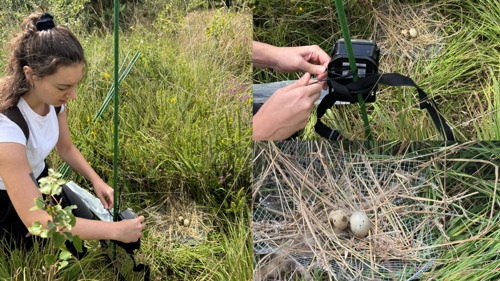
Becky is working with two undergraduate student researchers, who'll set up camera traps to monitor activity around artificial nests and will also watch the sites visually using binoculars. These artificial nests will be filled with quail eggs to mimic a natural nest. This will allow them to study how long it takes for the eggs to be found by natural predators – such as stoats – and how often they are disturbed by dogs. Their findings will help advise on how best to manage the heath so it continues to be a place ground-nesting birds can thrive.
Lowland heaths present an interesting challenge for the people managing them as the habitats themselves are declining because of urban development and they are threatened annually with wildfires, often caused by people. They are home to a rich diversity of wildlife, often including rare species. But many are also common land - open to the public to access and use. In south-eastern England, where the population has grown and urban areas spread, these lowland heaths have become valuable open green areas and are increasingly popular with dog owners looking for space to exercise their animals.
“Dogs don’t mean to cause problems – they’re just being dogs. But their presence can have unintended consequences – disturbing wildlife, leaving waste behind and introducing nutrients to the soil that will affect the natural ecosystem.”
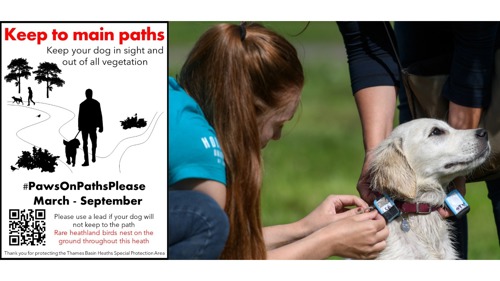
Becky’s previous research saw her partner with several local Wildlife trusts. One of the studies involved fixing GPS trackers to both dogs and their owners before they set off on a walk. The dog walkers were also asked to fill in questionnaires about their dog walking habits. Using this information, they were able to build comprehensive maps showing that the disturbed area increased by up to 21% because of off-lead dogs, highlighting the potential ecological impact on these sensitive habitats.
Next, they focused on the behaviours of the dog owners, concentrating on signage. They developed posters with their project partners, highlighting the presence of the birds and requesting that dogs keep their ‘paws on paths’ during the nesting season. They also worked on developing a range of techniques for the land managers to continue monitoring the situation. The next steps will be working directly with the dog owners to share the findings from this research and to look at ways the public could reduce the impact their presence may have in these areas.
Driven by seeing the influence her work can have, Becky’s research has implications for future housing development and in helping to inform the management of conservation areas. She also aims to help raise awareness of the positive and negative impacts that we can have on the biodiversity in our local environments. Just remember, next time you’re out with your dog, keeping paws on the path could help protect some of the UK’s rarest wildlife and habitats.
Discover more about Biological Science at Royal Holloway, University of London via the links below or return to our Research in Focus homepage to uncover more fascinating research taking place at the university.
Research in focus