Dr Anusha Seneviratne researches how air pollution, chemical toxins and the environment around us are linked to cardiovascular disease
Typical causes and unseen risks
Cardiovascular disease (CVD), including heart disease, is the leading cause of death globally and in the UK. Typical causes of heart disease include high blood pressure, smoking, diets rich in saturated fats and lack of physical activity. Some of these things we can control, but what about things that are out of our control? Have you ever considered that the environment around us – the very air that we breathe - might increase the likelihood of having a heart attack?
The impact of air and chemical pollution
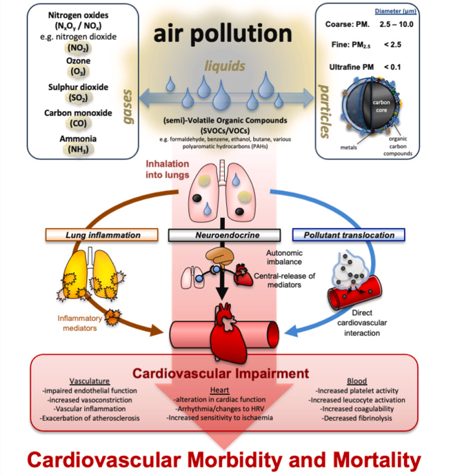
Research shows that air pollution from fossil fuel combustion is another major cause of CVD, contributing to over 5 million premature deaths a year. Studies suggest you are more likely to develop heart disease if you live in an area with heavy traffic, such as a ‘congestion zone’, due to long-term exposure to traffic-related air pollution. The WHO states that over 55% of the world’s population live in urban areas, and 91% of those people breathe polluted air.
Poor living conditions are known to drive chronic stress and poor mental health, which can increase blood pressure, inflammation and contribute to vascular diseases. And chemical pollution from plastics and other sources contaminate our water and soil which increases cardiovascular risk.
Dr Anusha Seneviratne, a specialist in CVD and lecturer in Health Studies at Royal Holloway, is researching how air pollution and chemical toxins are linked to the cardiovascular disease, atherosclerosis. This chronic inflammatory disease underlies most heart conditions, causing the buildup of plaques in our arteries leading to heart attacks and strokes. The research is in its early stages, but some preliminary data indicates that inflammation increases in response to diesel particles.
The role of light and noise pollution
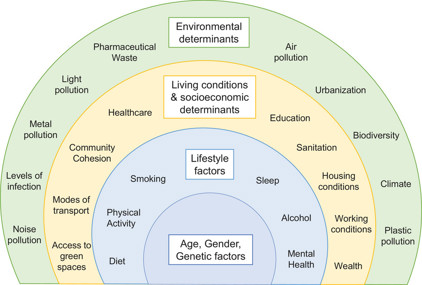
But it’s not just the air – Dr Seneviratne says there are many other environmental factors to consider when looking at our heart health. Light and noise pollution from increasing urbanisation can cause lack of sleep and increased levels of the cortisol hormone associated with hypertension and inflammation.
Natural protection and green spaces
Dr Seneviratne is examining these environmental factors and how natural anti-inflammatory compounds can offer protection. Her research shows that some naturally derived compounds can reduce inflammation associated with vascular disease. Curcumin, the active compound in turmeric, and sulforaphane, the active compound in broccoli, are also known to act as antioxidants to reduce vascular inflammation. Also Metformin, a drug for type 2 diabetes which is derived from the French Lilac plant, has been found to reduce inflammation and atherosclerosis.
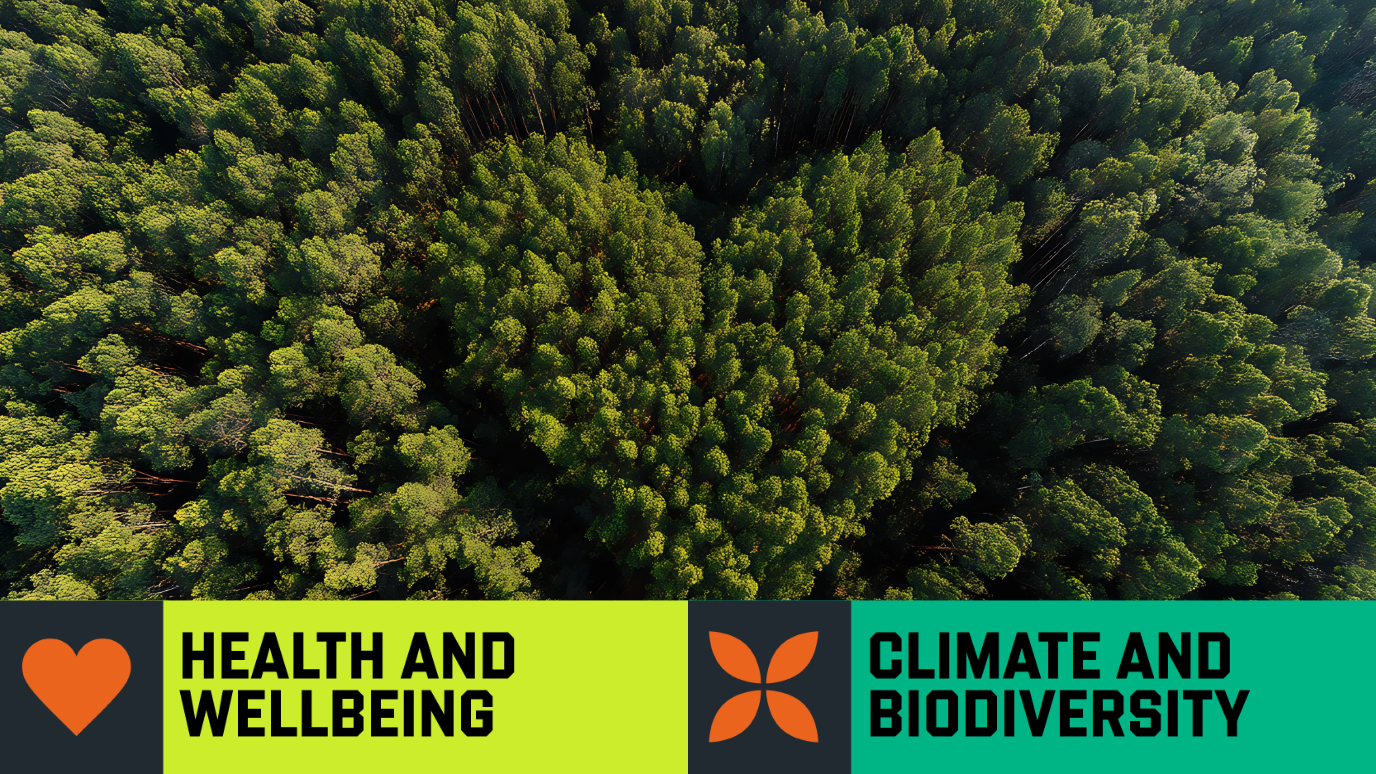
Exposure to green spaces has proved to have positive effects on mental health as it reduces stress and lowers cortisol levels. Forest trees, combined with the ability to absorb high levels of pollution, release a variety of compounds which exhibit anti-inflammatory effects. People living in highly populated areas have less green space, more air pollution and therefore a higher risk of cardiovascular disease. This highlights how important green spaces are to protect our health.
The need for further research
Dr Seneviratne says that the research can guide public health strategies to address both individual lifestyle and environmental exposure when considering cardiovascular health, but highlights the need for more investigation.
We know there is a link between air pollution and increasing cardiovascular disease, but there is very little known about the biological mechanisms and the immune cell response in the body. There is a huge gap in the literature at the moment and that’s an area I am trying to address.
Future collaborations
Grant applications are in place for upcoming research projects. Dr Seneviratne is looking forward to collaborating with other researchers in the Universities of Edinburgh, Oxford and Imperial College London to begin addressing these issues.
------------------------------------------------------------------------------
You can find out more about Dr Seneviratne's research here:
Air pollution and atherosclerosis: review article written by Anusha Seneviratne and Mark Miller
Diesel exhaust particles activate macrophages and IRF5 expression in atherosclerosis: research paper written by A Seneviratne, I Park, L Dib, I Mudway, I Udalova, M Miller, C Monaco
Environmental modulators of vascular physiology and inflammation: review article written by Anusha Seneviratne, Anne Majumdar, Kalpana Surendranath, Mark Miller
Metformin directly suppresses atherosclerosis in normoglycaemic mice: research paper written by Anusha Seneviratne, Luke Cave, Gareth Hyde, Soren Kragh Moestrup, David Carling, Justin C Mason, Dorian O Haskard, Joseph James Boyle
Return to our Research in Focus page to uncover more exciting research happening at Royal Holloway, University of London.
Research in focus