Discover how Dr Queenie Chan is searching for the origins of the universe inside the Astro-materials lab.
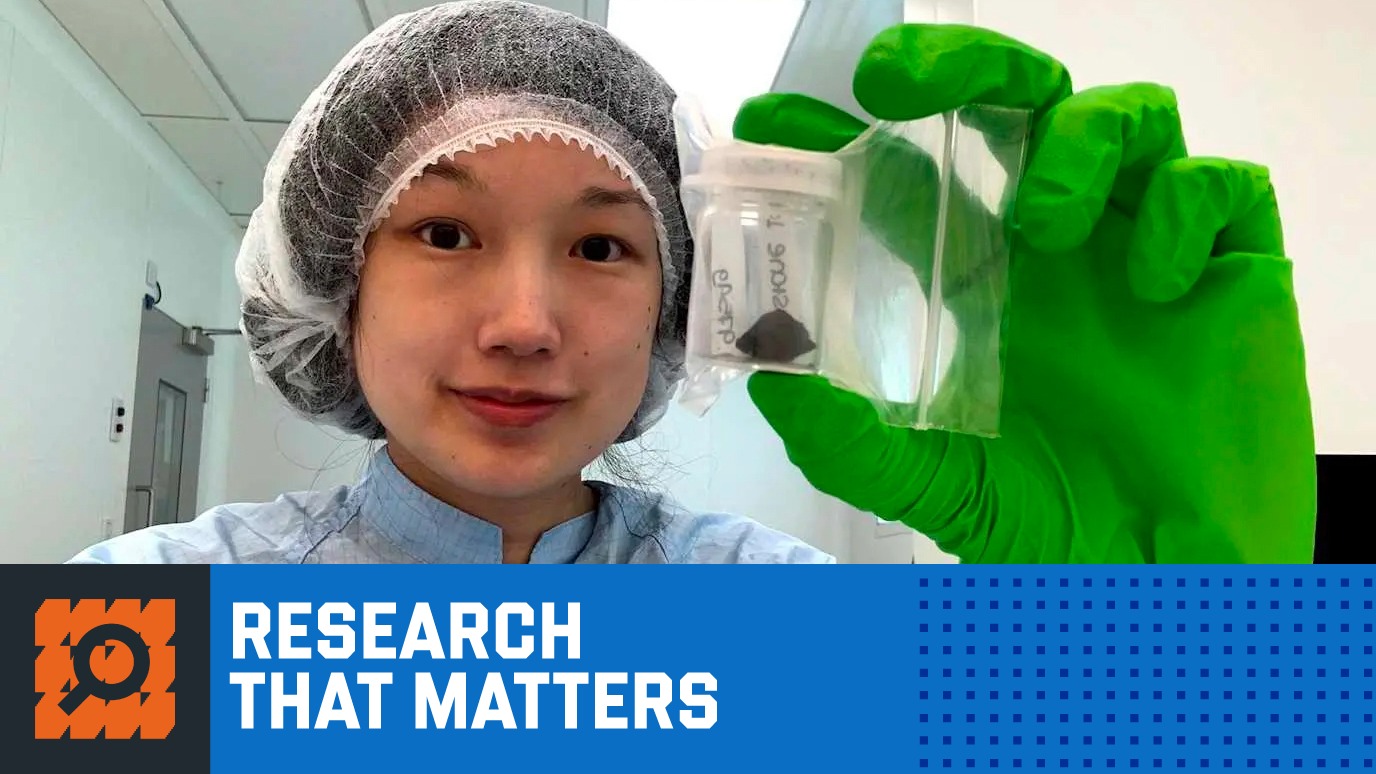
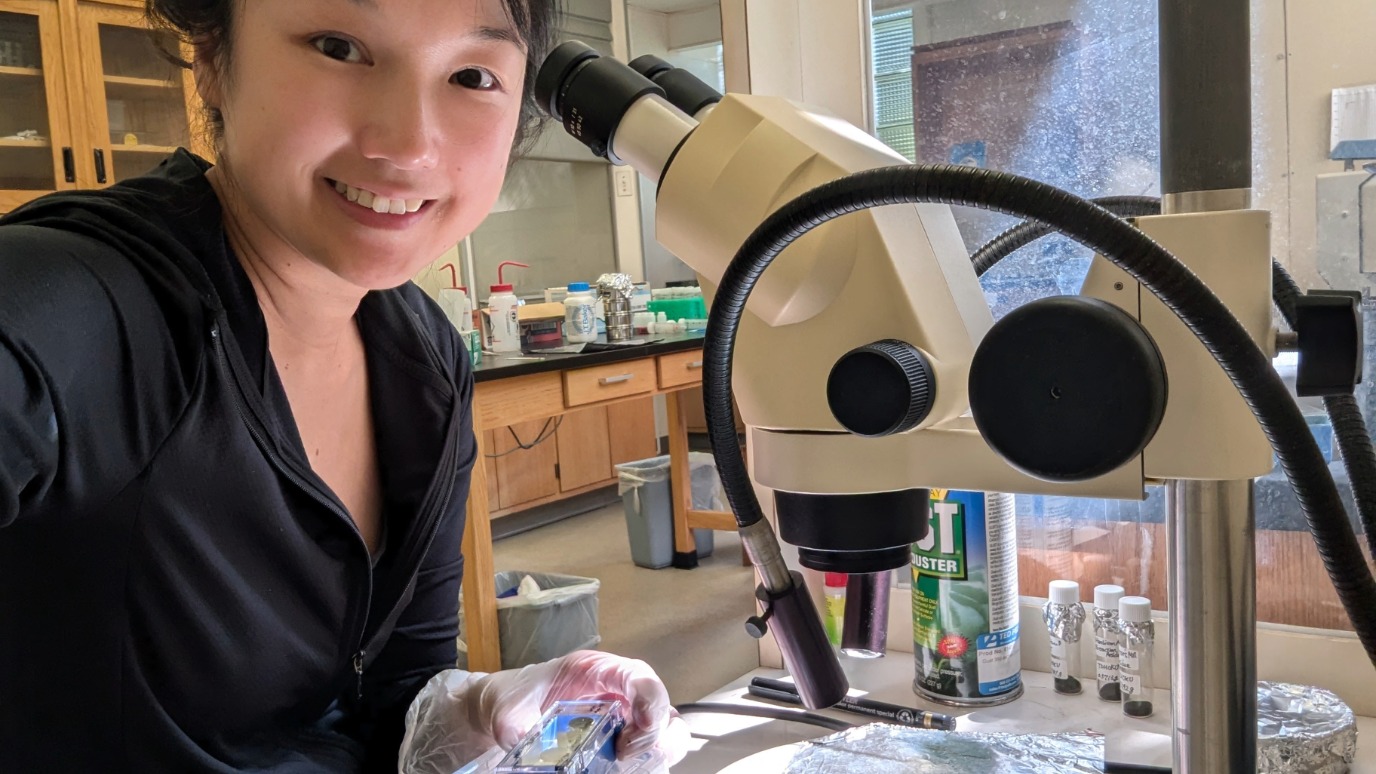
Step inside the Astro-materials lab at Royal Holloway and you’ll notice something unusual: everything is covered in tin foil. “It’s to prevent contamination by dusts and organic material here on Earth,” says Dr Queenie Chan, “the first thing you learn in a space lab is how to keep everything properly clean.”
Queenie Chan is a scientist hunting for the ‘spark of life’. She studies rocks and dust from outer space, searching for traces of water and organic materials, the key ingredients needed for the building blocks of life - amino acids. Combining elements of planetary, space, and earth sciences, she’s investigating how the solar system was formed and where life on our planet may have come from.
"JFK once said: We choose to go to the Moon in this decade and do other things, not because they are easy, but because they are hard.’ And I like that - I like this kind of research because it's difficult," says Queenie.
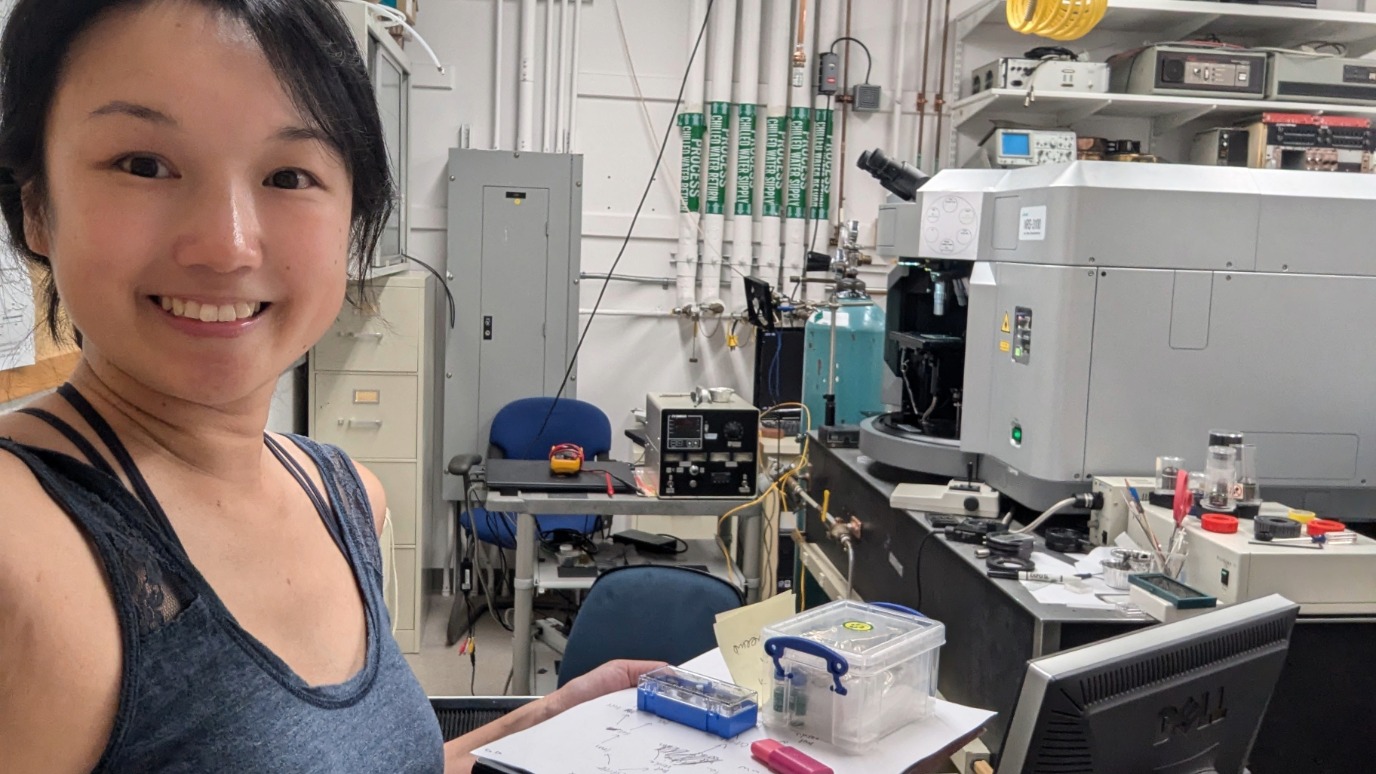
Using advanced scientific equipment and methods such as electron microscopes and spectrometers, she subjects her samples to a battery of tests to ‘see inside’ the rocks at a molecular level. Once water and organic materials are identified, Queenie asks: how did they get there? What happened on the asteroid? And, how do they start to build more complex compounds? For one experiment she and her collaborators set out to recreate the conditions of an asteroid in the lab. Placing some simple organic matter and liquid water in a test tube, they heated it to 150°C and left it for 30 days. “I was really surprised we were able to create amino acids in the lab. We actually made abundant, complex organics. That shocked me.”
From sky to sample
Before any lab work, Queenie needs the right material. She collaborates with global institutions, such as the Natural History Museum in the UK, and international space agencies to gain access to samples of rock they hold as objects of valuable scientific interest. Although it’s quite common for meteors and material to enter our atmosphere, finding a meteorite that has landed is quite rare.
Queenie led the team analysing the organic material discovered on the Winchcombe Meteorite - the first meteorite to land in the UK for 30 years. Their findings uncovered insights into how the molecules that started life on Earth may have been formed on asteroids in outer space. She’s also currently studying a new meteorite discovered in the USA and had the opportunity to work on her personal favourite, Murchison, an Australian meteorite recovered in 1969, the same year humans first went to the Moon.
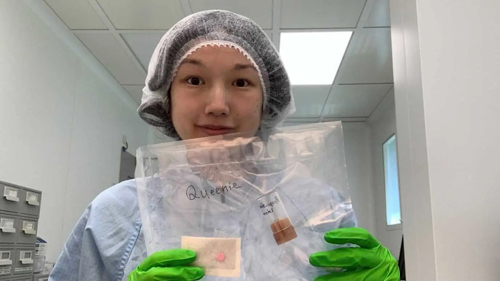
Queenie also helps track and recover meteorites working with the UK Fireball Alliance (UKFAll). A camera on the roof of a building at Royal Holloway University is part of UKFAll’s network, recording the skies, looking for shooting stars and feeding back data that helps identify where they might land. Queenie lends her expertise in recovering and identifying any material that does get found. She is also currently working on a project with a student developing drone techniques to help spot meteorites in the landscape, and they were excited to hear the news of the recent fireball over Scotland and the possibility of finding a new meteorite.
Heading into space
Queenie also works on other organic matter, pristine samples gathered directly from asteroids during space missions. These samples can often provide a clearer picture as they do not risk the contamination that can occur when meteors enter our water rich atmosphere and land on Earth. She’s studied fragments from the carbon-rich asteroid Ryugu, brought back to Earth by the Japanese Space Agency’s (JAXA) Hayabusa2 space mission, and samples from the USA’s National Aeronautics and Space Administration’s (NASA) OSIRIS-REx mission to Bennu, their first mission to gather material from an asteroid.
Video: Queenie discusses the return of the Hayabusa2 mission in 2020.
Her expertise is also helping shape future missions, she’s currently working on refining analysis techniques for samples to be collected during JAXA’s 2026 Martian Moon Exploration (MMX) mission. The project will investigate how some of the planet’s moons were formed and will return in 2031 with samples from the moon, Phobos, which Queenie is hoping to be among the first to study.
In the Lab
Preparation is key to Queenie’s work, as many of the tests she does are destructive so can only be run once per sample.
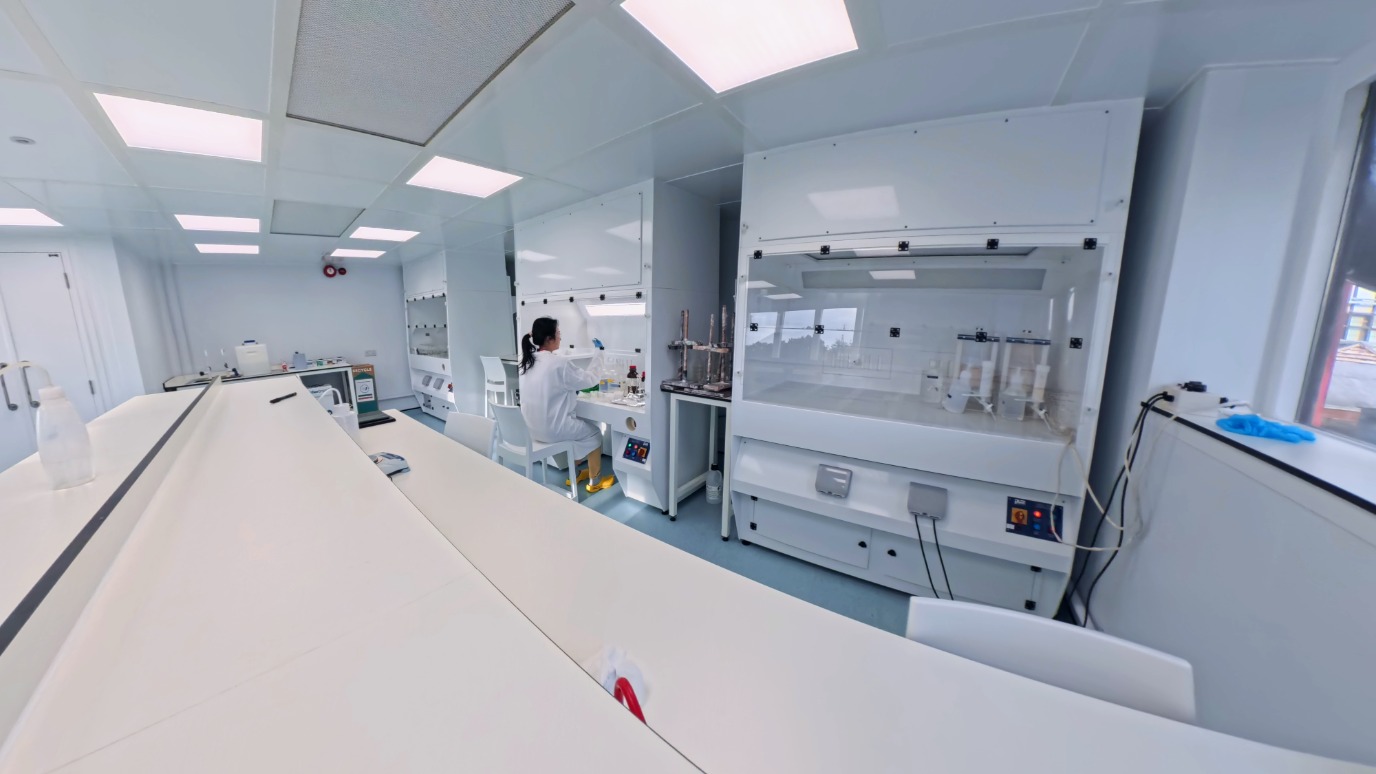
In the lab, glassware is scrubbed clean, sealed with aluminium foil and baked to 500°C to remove the final traces of organic material. Samples are ground into as fine a powder as possible which increases the surface area for extracting material for the experiments. In between tests, samples are stored in a special container flooded with nitrogen gas to reduce the risk of exposure to water in the air. Experiments are run in a clean lab using equipment that keeps the air free from dust and other particles and in sealed, sterile containers to prevent contamination.
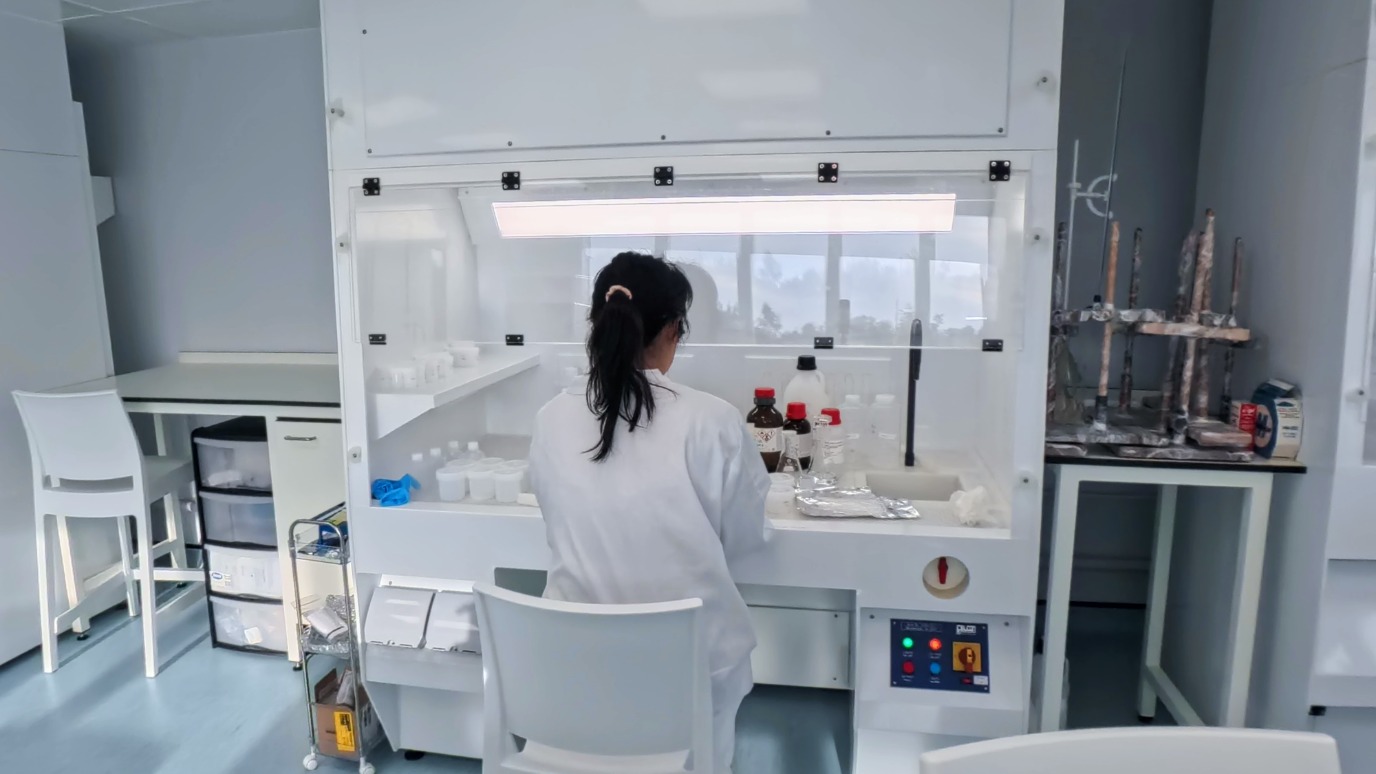
Queenie working in the lab using an ISO Class 5 standard laminar flow hood – part of the equipment in the clean lab at the Department of Earth Sciences
Beyond the Lab
Queenie’s work doesn’t stop at research. She’s passionate about outreach often working participating in public events and school visits, and she especially enjoys encouraging women and people from minority groups into science. As a mother and someone who was born outside the UK, she understands the challenges faced by many and she’s keen to act as a role model, helping to demonstrate pathways for others to pursue their dreams.
“It’s so gratifying to be able to share what I do and see students interested in and wanting to be involved in this kind of research” she says. “You constantly feel that whatever you’re doing is making an impact. People want to hear about it. Even little kids want to be involved.”
Find out more about Queenie's work and the Department of Earth Sciences via the links below.
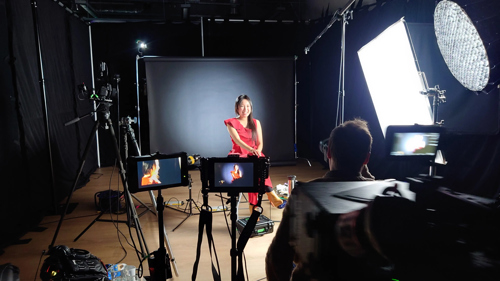
Filming BBC's 'Solar System' Watch Queenie on BBC's 'The Sky at Night'
Return to our Research in Focus page to uncover more exciting research happening at Royal Holloway, University of London.
Research in focus