Music shapes our emotional response, guides our attention and often becomes as memorable as the stories themselves. Dr Tim Summers has made it his mission to uncover how music affects how we experience stories, in video games, multmedia franchises, theme parks, and beyond.
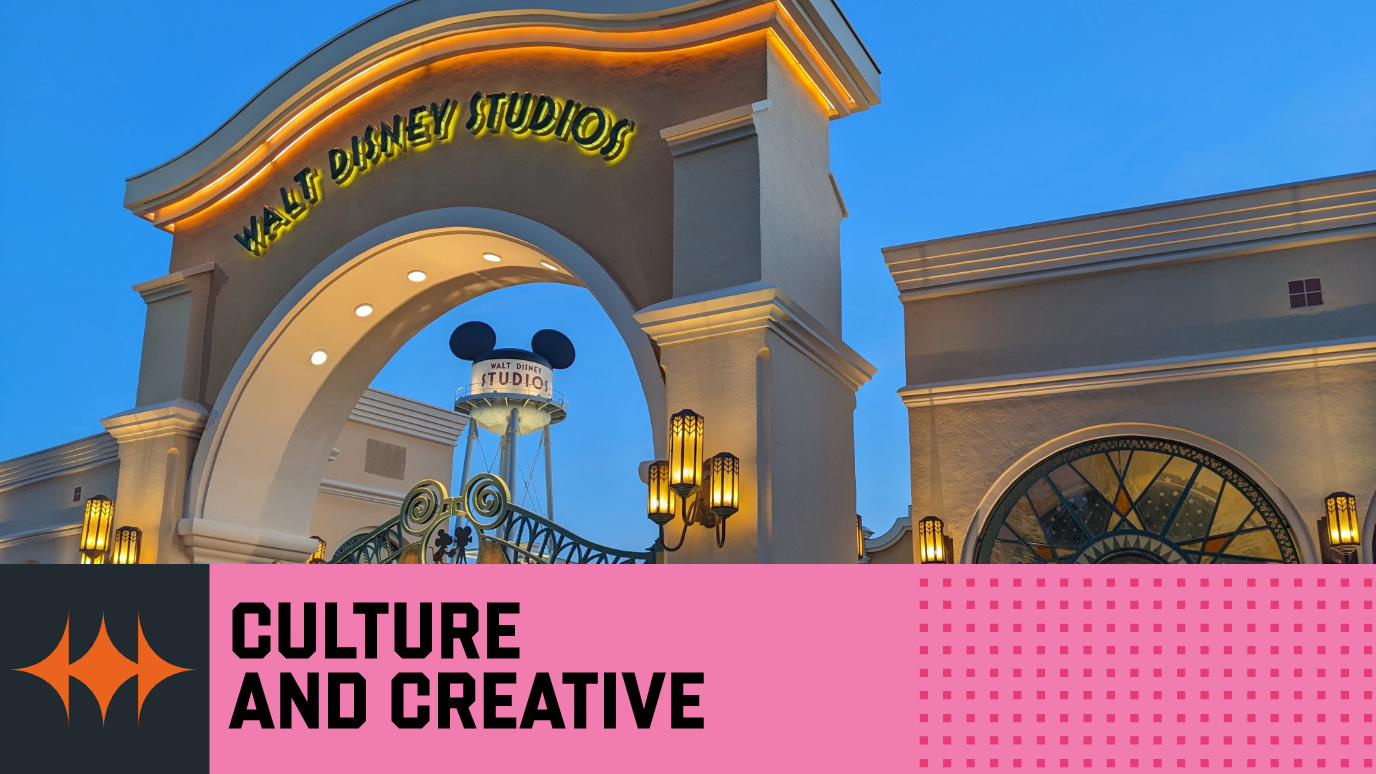
Image of Walt Disney Studios Park, with Culture and Creative banner underneath
Imagine watching Jaws without the ominous, tension-building soundtrack, playing Super Mario Bros. without the bouncy, iconic Level 1-1 theme, or visiting a theme park without any background music. Music and sound are critical to setting the tone, creating atmosphere, and involving us in the worlds of film, television, themed experiences and video games. Music shapes our emotional response, guides our attention and often becomes as memorable as the stories themselves.
Dr Tim Summers has made it his mission to uncover how music affects how we experience stories. He explores how soundtracks don’t just accompany a narrative experience – they create it. From the pulse-pounding score of a battle and the eerie hum of a horror film, to the reactive rhythms of a video game and soaring music of a ride, music shapes how we feel and how we connect with the worlds we love.
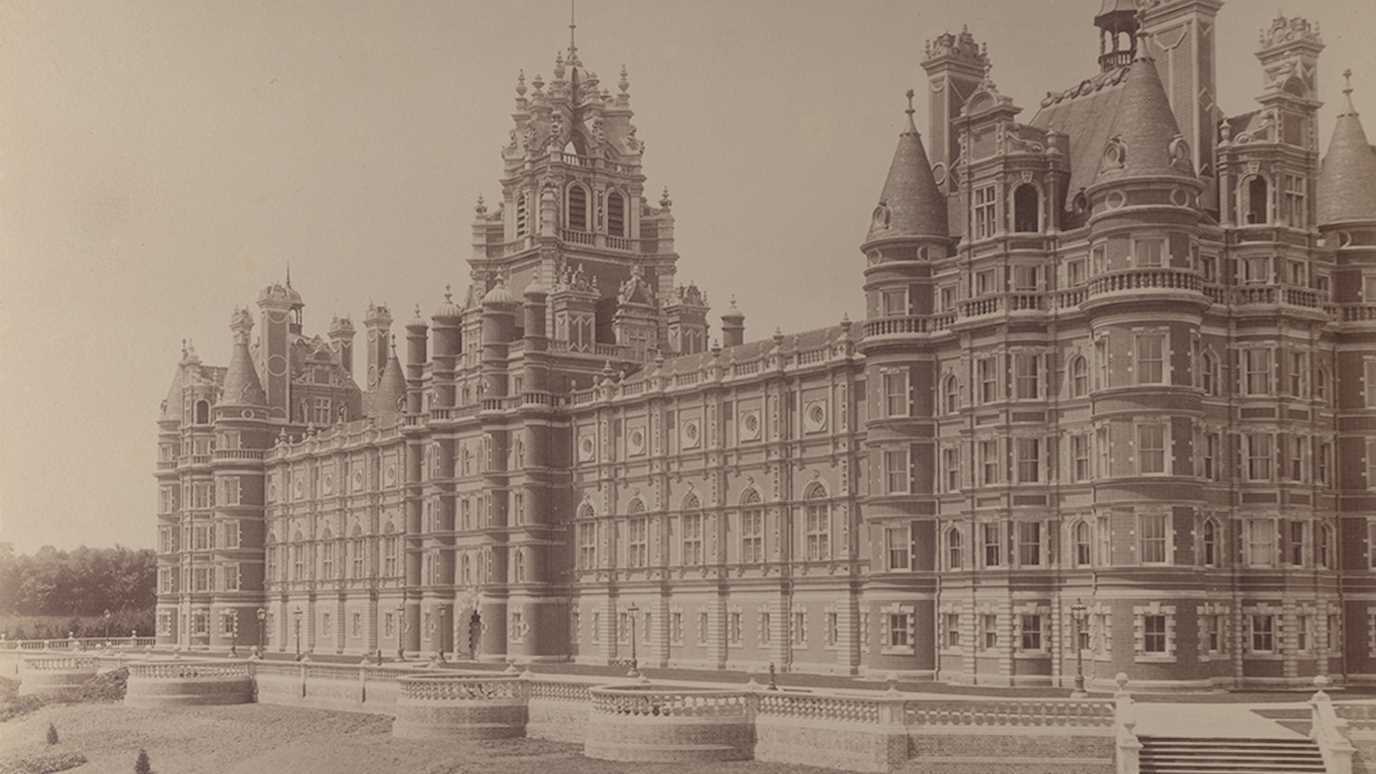
Tim is a musicologist and senior lecturer in music at Royal Holloway, University of London, whose research spans video games, film/television and theme parks, each revealing how music helps us connect with the stories we see, experience and play.
One of Tim’s areas of interest is in how music functions within long-running multimedia franchises. “Music can help tie a franchise together by creating a unique identity,” he explains. “Take Star Trek, for example. The music for the 1960s TV series is dramatic, with lots of musical outbursts, while the 1990s series are far more understated, and the recent films and series take after Hollywood action blockbusters. But all are still recognisably Star Trek, despite their differences. Using similar instruments, musical structures, textures and hints of recurring themes, they keep the music sounding ‘like Star Trek’.
The James Bond series is similar, he says. “Each film has a different opening theme song sung by a popular artist, and written by a range of different songwriters, yet all are recognisably ‘Bond themes.’ They share instrumentation, chord progressions, lyrical topics and what we might call ‘musical gestures’. The music evolves with the character, reflecting different eras and tones, but always retains a core identity – a kind of musical DNA.”
Another area of Tim's research is more unexpected: theme parks, and in 2024, he co-organized the first academic conference dedicated to theme park music and sound. He’s particularly interested in how music enhances the sensation of movement and emotion on rides. One of his case studies is ‘Soarin’, a ride at Walt Disney Parks that simulates a hang glider flight. “The music is made up of a series of variations on the same theme, but each version of the theme uses rhythm and musical textures to provide a sense of motion and movement. A slow melody over a fast-rhythm accompaniment is like gliding gracefully while the ground whizzes beneath you.” He believes that theme park music is a vital part of the illusion, helping riders feel like they’re truly soaring through the sky.
But it’s video games that have captured Tim’s deepest and longest-standing interest. Why? “Because unlike film or television, games are interactive. They create a personal relationship with the individual playing the game. Often, games use dynamic music systems that respond to the player’s actions in real time, like the responsive music of the Red Dead Redemption games. But even outside dynamic music, we connect with music in games through our interaction with the gameplay and stories of the games, whether in the fantasy world of Hyrule in the Zelda games or the cyberpunk dystopia of Final Fantasy VII.
He's also interested in how video game music can reflect gender and sexuality and even be “queer by design” – a space where musical norms are bent, subverted, or reimagined, just like the characters and stories they accompany. “Games present ways of listening to, engaging with, and understanding music that provide opportunities to challenge assumptions,” he writes in his 2023 book, The Queerness of Video Game Music.
Tim is a co-founder of the Ludomusicology research group and the Journal of Sound and Music in Games, and in 2024 he published Pixel Soundtracks, a book that explores the history and function of game music through 20 case studies. As well as gender and sexuality, his work often intersects with games where players inhabit different characters. He studied how music in games like the Final Fantasy series supports identity exploration and emotional immersion. “Game music can ‘pass’ – it borrows familiar styles when needed,” he writes, “but there is still a queer heart that is particularly apparent to those with whom it resonates.”
By tuning into the emotional power of music across media, Tim Summers helps us hear the stories we love in entirely new ways—and reminds us that sometimes, it’s the soundtrack that speaks the loudest.
Return to our Research in Focus page to uncover more exciting research happening at Royal Holloway, University of London.
Research in focus